Uganda’s presidential and parliamentary elections on Thursday faced major disruptions as logistical challenges, biometric machine failures, and an internet shutdown created chaos in multiple regions across the country. While more than 21 million Ugandans had registered to vote, long delays and technical glitches left many voters frustrated, unable to cast their ballots on time.
Delays and Technical Malfunctions Disrupt Voting
In the capital, Kampala, voters queued for hours at polling stations as delays stretched into four hours, with many polling stations failing to open on time. BBC Africa observed growing frustration among voters, especially in areas where biometric identification kits failed to work. The delays were further compounded by a shortage of equipment at some polling stations, causing a significant backlog in processing voters.
One frustrated voter, Kaweesi Ismail, told the BBC, “I’m angry because I have not voted up to now. We were meant to start at 7 a.m., but up to now [8 a.m.] we haven’t started. The ballot papers are not even here, I don’t even know what to say.”
In some places, polling materials and equipment did not arrive on time, forcing many voters to leave without casting their ballots. While the situation improved in some areas, the problems persisted in key locations, where biometric voter verification machines (BVVK) continued to malfunction.
The Uganda Electoral Commission quickly issued an apology for the technical issues and assured the public that officials were working to resolve the glitches. However, the widespread failures have raised serious questions about the effectiveness and reliability of Uganda’s electoral infrastructure.
Internet Shutdown and Growing Tensions
As if the technical delays weren’t enough, an internet shutdown imposed ahead of election day exacerbated the sense of frustration. The Uganda Communications Commission (UCC) justified the blackout, claiming it was necessary to prevent the spread of misinformation, electoral fraud, and the incitement of violence. However, the move was widely condemned by international organizations, including the United Nations Human Rights Office, which called the shutdown “deeply worrying” for transparency and freedom of information.
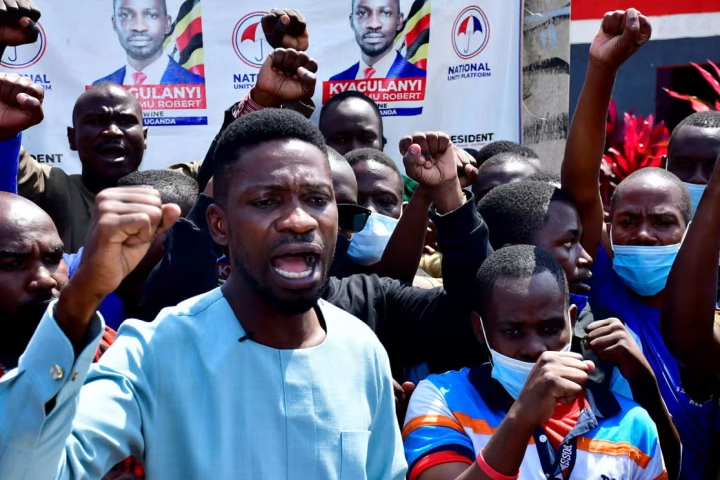
The opposition, led by Bobi Wine, has rejected the UCC’s explanation, accusing the government of attempting to suppress opposition activity and prevent the sharing of election-related evidence. In response, Wine’s National Unity Platform (NUP) launched an offline vote-monitoring app called Bitchat, which uses Bluetooth technology to share images of the results forms from polling stations without requiring internet access.
Allegations of Election Fraud and Ballot Stuffing
As the voting process continued, Bobi Wine took to social media to accuse the ruling government of electoral manipulation. In a post on X (formerly Twitter), Wine claimed that biometric voter verification machines had “failed everywhere,” alleging widespread ballot stuffing and irregularities across the country. Wine’s accusations were supported by claims of arrests targeting NUP officials and polling agents.
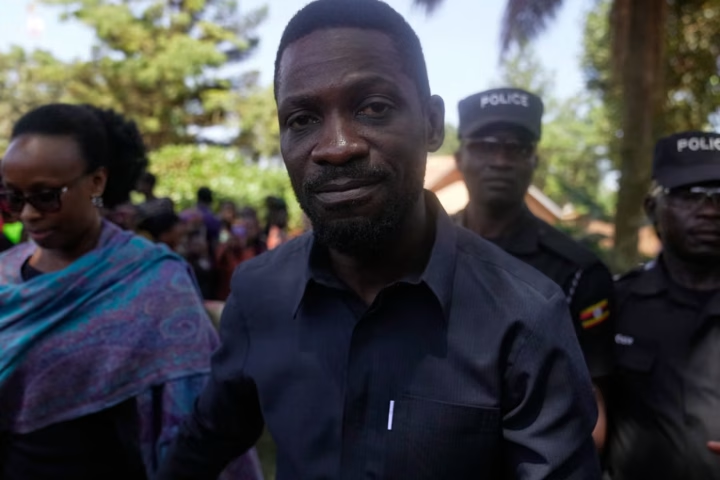
“Our leaders, including the Deputy President for the Western Region, have been arrested,” Wine claimed. He further stated that his party’s polling agents were either abducted or chased away from polling stations, an accusation that was later corroborated by witnesses in several locations.
Wine’s allegations point to a pattern of voter suppression tactics, which have plagued previous elections. Security forces have been accused of harassing opposition members and supporters, with Amnesty International and the United Nations documenting human rights violations during the campaign period. Reports of police brutality, including the use of tear gas, pepper spray, and physical assaults, have raised alarm about the integrity of the electoral process.
Museveni Experiences Biometric Problems
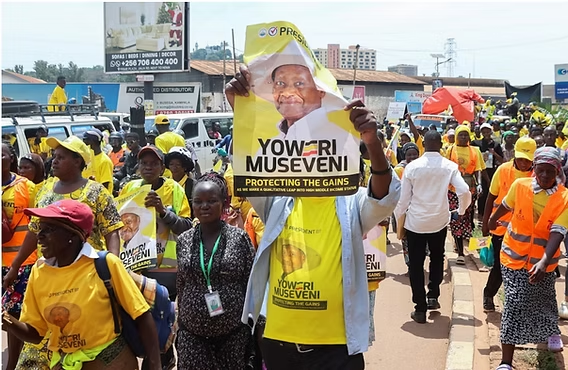
Despite the widespread accusations of fraud, President Yoweri Museveni himself experienced problems with the BVVK machines when he cast his ballot in his home village of Rwakitura, in the western Mbarara region. Museveni, 81, who has ruled Uganda since 1986, is seeking a seventh consecutive term in office. In a statement, he revealed that his thumbprint was not accepted by the machine, but facial recognition successfully verified his identity.
“I put my thumbprint on the machine, but it did not accept it. However, my face was accepted instantly by the machine. The machine works,” Museveni said, adding that he suspected there was a problem with the machine’s settings or angle.
Asked whether he would accept the election results, Museveni responded, “This is one of the manipulations—we have to find out why, what was the problem? We are now verifying whether this was deliberate.”
The Electoral Commission’s Response
In light of the biometric failures, Simon Byabakama, the head of the Electoral Commission, announced that where the biometric machines failed, officials would use the national voter’s register to ensure that all eligible citizens could vote. He emphasized that Uganda’s election law allows for polling hours to be extended if technical difficulties delay the process.
Byabakama stated, “Polling stations will remain open until all registered voters in the queue by 4:00 pm local time have cast their votes.” However, the commission did not explicitly mention whether this would apply universally, as challenges varied across regions.
A Divided Country
This election, which pits Museveni against Bobi Wine, has deeply divided Uganda. While Museveni emphasizes his role in ensuring stability and economic growth, critics point to widespread corruption, human rights violations, and poor governance during his tenure. Wine, a pop star turned politician, has promised sweeping reforms and anti-corruption measures, gaining significant traction among young Ugandans, who make up a large portion of the electorate.
However, as Museveni’s long-standing rule faces increasing scrutiny, many Ugandans fear that the outcome of this election may simply extend the president’s grip on power for another term.
Security Concerns and Election Transparency
As the election unfolds, it is clear that Uganda’s political future is at a crossroads. The technical failures, internet shutdown, and allegations of fraud raise serious questions about the credibility and fairness of the process. International observers will be closely monitoring the situation, but with the widespread reports of irregularities and government interference, many Ugandans are left wondering whether they will ever experience a truly free and fair election.
The result of the presidential election, expected to be announced by 16:00 local time (13:00 GMT) on Saturday, will likely have a profound impact on the country’s political landscape, as Museveni seeks to extend his rule into an unprecedented seventh term.
A Nation on Edge
As Uganda watches this historic election unfold, it is clear that the political landscape is changing. With Bobi Wine emerging as a strong contender, and the Museveni government clinging to power amid accusations of fraud, it is clear that Uganda is at a critical juncture. How this election is resolved will not only shape the country’s immediate future but also the legitimacy of its democratic processes moving forward.