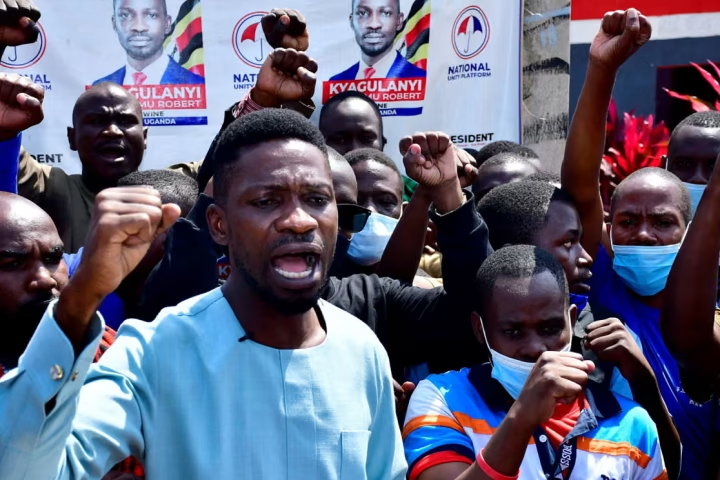
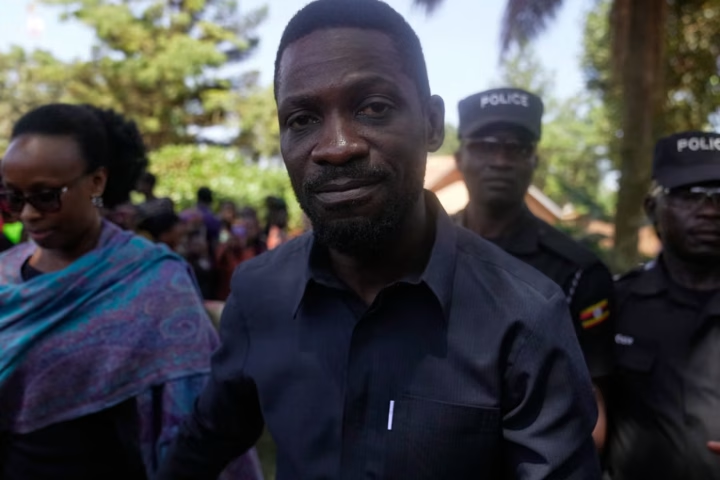
In a dramatic escalation of the ongoing political tensions in Uganda, opposition leader Bobi Wine has revealed that he is currently in hiding following a military raid on his home. The raid, he claims, was carried out by forces loyal to President Yoweri Museveni and his son, Muhoozi Kainerugaba, the country’s army chief. Wine, who has long been a vocal critic of the regime, described his family’s situation as dire, with his relatives reportedly under house arrest. He expressed deep fears for his safety, especially after threats allegedly made by Kainerugaba. Wine, who disputes the official results of Uganda’s recent election, believes he was the rightful winner, but the government’s refusal to accept his claims has left him with little faith in the judicial system.
The Election Dispute:
The controversy began with Uganda’s general election on January 15, 2026, which saw President Museveni secure another term in office. However, Bobi Wine, leader of the opposition party, has refused to accept the official results, claiming he was the true victor of the election. He has accused the government of rigging the election, a claim that is not uncommon among opposition leaders in the country.
In the wake of the disputed election, Wine’s life has become increasingly difficult. He alleges that the military raid on his home was an attempt to intimidate him and silence any resistance to Museveni’s rule. Wine believes that the actions of the military are part of a larger pattern of repression orchestrated by the Museveni administration to suppress opposition voices and maintain power at all costs.
Threats and Fears for Personal Safety:
Wine, whose real name is Robert Kyagulanyi, stated that he has been forced to go into hiding due to the threats against his life. He believes that Muhoozi Kainerugaba, the son of President Museveni and a powerful figure within Uganda’s military, has played a significant role in targeting him. Wine claims that Kainerugaba personally threatened him, further fueling his fear for his safety. The opposition leader has suggested that the threats and subsequent raid are part of a broader strategy by the ruling regime to intimidate him and his supporters into submission.
Wine has been a persistent critic of Museveni’s government for years, and his efforts to challenge the status quo have made him a target of both verbal and physical intimidation. His current situation reflects the broader climate of political repression in Uganda, where dissent is often met with harsh retaliation from the government.
House Arrest and Growing Political Tensions:
According to Wine, his family is currently under house arrest, and they are being closely monitored by the military. This development has drawn widespread condemnation from human rights groups, who argue that such actions are a clear violation of basic freedoms and the right to political participation.
The use of military force to silence political opposition has been a hallmark of Museveni’s long-standing rule in Uganda. Wine, who was once a popular musician before entering politics, has emerged as one of the most prominent critics of the Museveni administration. His stance on nonviolent resistance has earned him widespread support both in Uganda and internationally, but it has also made him a frequent target of government forces.
Wine’s decision to go into hiding marks a significant shift in the political climate of Uganda. His calls for peaceful resistance stand in stark contrast to the heavy-handed tactics employed by the government, and he has vowed to continue his struggle for democratic change, even at great personal risk.
Disillusionment with Uganda’s Judiciary:
A central part of Wine’s opposition to the election results lies in his belief that Uganda’s judiciary is fundamentally biased and serves the interests of the ruling regime. Wine has made it clear that he has no faith in the courts, arguing that they are incapable of delivering a fair ruling in any case that challenges the government’s position. His comments reflect a broader disillusionment with the political system in Uganda, where many citizens believe that the judiciary, like other state institutions, is controlled by those in power.
Rather than pursuing legal channels, Wine has urged his supporters and fellow Ugandans to engage in nonviolent resistance. He has consistently promoted peaceful methods of protest, calling for civil disobedience and political activism to challenge the legitimacy of Museveni’s government. However, the crackdown on dissenting voices in Uganda has made it difficult for these efforts to gain momentum, as the regime continues to employ force to stifle opposition.
International Reactions and Support for Bobi Wine:
Wine’s plight has attracted attention from both local and international observers, with human rights groups and foreign governments condemning the actions of the Ugandan military. The United Nations and various NGOs have called for an immediate end to the political repression in Uganda, urging the government to respect the rights of opposition leaders and their supporters.
The international community has also expressed concern over the deterioration of democratic freedoms in Uganda. Many observers fear that Wine’s situation is emblematic of the broader erosion of political freedoms under President Museveni’s rule, which has seen the country’s democratic institutions gradually weaken over the years.
Western governments, including the European Union and the United States, have been vocal in their criticism of Uganda’s political repression, though their calls for reform have largely been ignored by the Ugandan government. The Museveni administration has long enjoyed diplomatic and financial support from international partners, but the recent crackdown on opposition figures like Wine has sparked renewed calls for a reassessment of these relationships.
The Future of Political Resistance in Uganda:
As Bobi Wine remains in hiding, the political situation in Uganda continues to evolve. Wine’s calls for peaceful resistance and his rejection of the country’s judiciary highlight the growing frustration among opposition groups and ordinary Ugandans who feel marginalized by the ruling regime.
The ongoing crackdown on political dissent, including the targeting of opposition figures and the suppression of free speech, has created a climate of fear and uncertainty. Despite this, Wine’s supporters remain hopeful that his message of nonviolent resistance can eventually bring about meaningful change in Uganda.
As the struggle for democracy in Uganda continues, the international community is likely to keep a close watch on the developments surrounding Bobi Wine. His situation is a crucial test for Uganda’s political future, as the country grapples with the question of whether it will remain under the control of a long-standing autocratic regime or move toward a more open and democratic syste