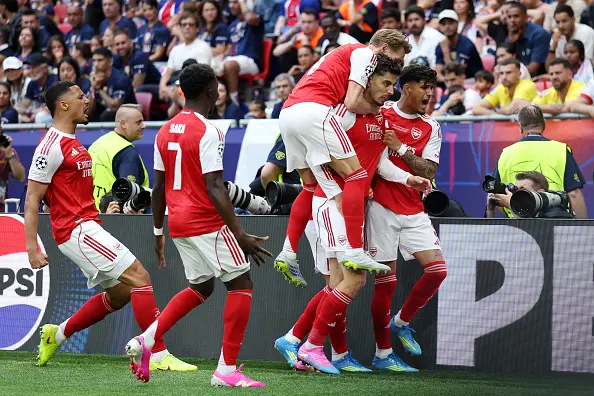
Arsenal Champions League hopes surged after Kai Havertz struck inside six minutes to give Mikel Arteta’s side a 1-0 half-time lead over Paris Saint-Germain in the UEFA Champions League final.
The goal changed the mood of a tense first half. Arsenal started with aggression, pressed high, and punished PSG before the French side could settle. Havertz showed calm under pressure from Marquinhos and gave Arsenal the perfect platform.
PSG responded with long spells of possession, but possession alone did not hurt Arsenal. The London side stayed compact, defended with discipline, and forced the French champions into hopeful efforts from distance. By the interval, Arsenal were 45 minutes away from a first Champions League title and a remarkable season double.
Arsenal Champions League Dream Starts With Havertz
Havertz entered the final with the weight of expectation on his shoulders. Arteta trusted him to lead the line, and the German forward rewarded that decision almost immediately.
His sixth-minute goal gave Arsenal more than a lead. It gave them control of the emotional temperature of the match. PSG suddenly had to chase, while Arsenal could defend with shape and choose their attacking moments carefully.
The finish also underlined Havertz’s growing importance in Arteta’s system. He offered movement, height, composure, and the ability to link play under pressure. On a night of huge stakes, he gave Arsenal the ruthless edge they needed.
Arsenal Champions League Control Built on Defence
The most impressive part of Arsenal’s first half was not only the early goal. It was the discipline that followed.
PSG enjoyed more of the ball and sent repeated attacks toward Arsenal’s box. Yet Arsenal’s defensive line, led by William Saliba and Gabriel, stayed alert. Saliba cleared danger from set pieces, while Gabriel attacked crosses and denied PSG clean contact in dangerous areas.
David Raya had little to do until late in stoppage time, when Fabian Ruiz’s effort from outside the box went straight at him. That was PSG’s first shot on target, a telling sign of Arsenal’s defensive authority.
This was a defensive masterclass built on spacing, timing, and concentration. Arsenal did not simply survive pressure. They controlled where PSG could play and limited the quality of their chances.
PSG Possession Fails to Hurt Arsenal
Paris Saint-Germain had the ball for long periods, but Arsenal controlled the risk. The French side moved possession from flank to flank, searching for openings, but they rarely found space behind the Arsenal defence.
Desire Doue tried to force the issue with a shot from distance in added time. Raya watched it fly over, a moment that summed up PSG’s frustration. They had territory, but Arsenal had the better structure.
PSG looked increasingly short of ideas as the half progressed. Their passing was neat, but their attacks lacked penetration. Arsenal’s midfield screen made central routes difficult, while the back four handled wide deliveries with authority.
Arsenal Champions League Final Carries Historic Weight
The Arsenal Champions League mission carries enormous meaning for the club and its supporters. Arsenal have chased this trophy for decades, and their near miss in 2006 still sits heavily in the club’s European history.
This generation now has a chance to create a different ending. Arteta’s team entered the final with confidence, structure, and the belief of a side that has grown through pressure.
A victory would deliver Arsenal’s first Champions League title. It would also complete a memorable double and confirm the club’s return to the very top of European football.
That context explains the urgency in Arsenal’s first-half performance. They did not play like a team overwhelmed by the occasion. They played with clarity, intensity, and purpose.
Why Arteta’s Game Plan Is Working
Arteta’s first-half plan rested on three clear ideas: start fast, protect the centre, and force PSG into low-value shots.
The early press delivered the opening goal. After that, Arsenal narrowed the pitch and made PSG’s creative players operate in crowded areas. Bukayo Saka and Leandro Trossard tracked back, Declan Rice closed passing lanes, and the centre-backs defended the penalty area with authority.
Rice nearly helped create another chance when his free kick from deep on the right found Gabriel. The defender made contact but steered his header over the bar. Even while defending a lead, Arsenal still looked dangerous from set pieces.
The Arsenal Champions League challenge now depends on whether they can repeat that discipline after the break. Finals often turn on concentration, and PSG still have the talent to punish one lapse.
What Arsenal Must Do After Half-Time
Arsenal cannot afford to mistake control for comfort. PSG will almost certainly increase the tempo, push players higher, and take more risks after the restart.
Arteta’s side must stay compact and avoid unnecessary fouls around the box. They also need to manage possession better when chances come to slow the game down. A second goal would change the final completely, but chasing it recklessly could open spaces for PSG.
Fresh legs may become important after the hour mark. Arsenal’s wide players have worked hard defensively, and PSG will likely keep attacking the channels. Arteta must judge carefully when to protect the lead and when to refresh the attack.
Arsenal Stand 45 Minutes From History
The first half belonged to Arsenal because they combined ambition with discipline. Havertz delivered the breakthrough, the defence absorbed pressure, and PSG reached the interval searching for answers.
The Arsenal Champions League story now stands close to its defining chapter. Forty-five minutes remain between Arteta’s side and the trophy Arsenal fans have waited generations to see lifted.
If Arsenal maintain their structure, manage the pressure, and keep PSG away from clear chances, this could become one of the greatest nights in the club’s history.
READ: Rice Double Stuns Madrid in Arsenal’s Champions League Win