Kampala, Uganda — President Yoweri Museveni has been declared the winner of Uganda’s presidential election, extending his leadership of the East African nation after a vote the authorities described as transparent and fairly conducted. The announcement, made by the Electoral Commission in the capital, confirms that the 81-year-old leader will serve another five-year term.
According to official results, Museveni secured 72 percent of the vote, comfortably ahead of his closest challenger, Bobi Wine, who garnered 25 percent. The outcome cements Museveni’s position as one of Africa’s longest-serving leaders, having first come to power in 1986 following a guerrilla war.
Election officials said the process reflected the will of Ugandan voters and met constitutional requirements. They cited nationwide polling, verified tallies, and monitored counting procedures as evidence that the Museveni victory was achieved through a credible and transparent process, despite a tense political climate.
Museveni, a former rebel leader turned statesman, has now won seven elections since taking office. In a brief statement following the declaration, he thanked voters for their confidence and pledged to focus on economic stability, national security, and long-term development. He also emphasized unity, urging Ugandans to move forward peacefully after the polls.
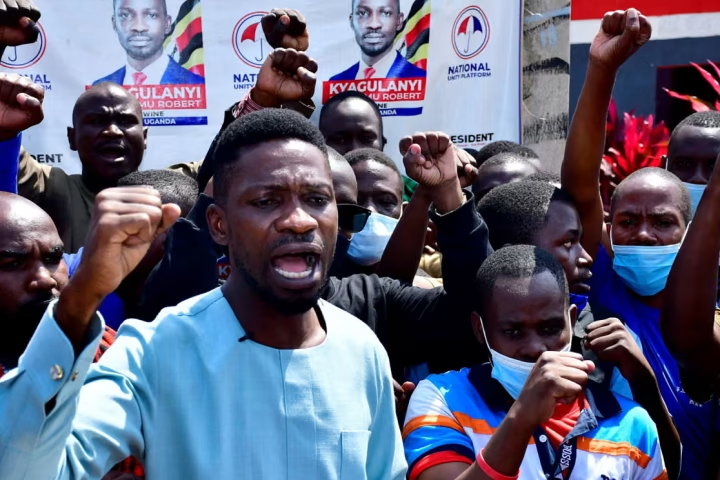
Bobi Wine, a former pop star who has emerged as a powerful opposition voice among younger voters, rejected the results and alleged irregularities, including ballot stuffing. However, he has not provided documented evidence to support the claims, and authorities have not confirmed any systemic fraud. Wine called on his supporters to engage only in non-violent actions as legal avenues are explored.
Security concerns dominated the days surrounding the vote. Authorities confirmed that at least seven people were killed in election-related incidents, while opposition figures claimed higher numbers. Independent verification has been difficult, particularly after the government imposed a temporary internet shutdown earlier in the week.
Officials defended the blackout as a preventive measure aimed at curbing misinformation and incitement. International observers and human rights groups expressed concern, arguing that such restrictions limit transparency. The government later said services would be restored gradually as stability returns.
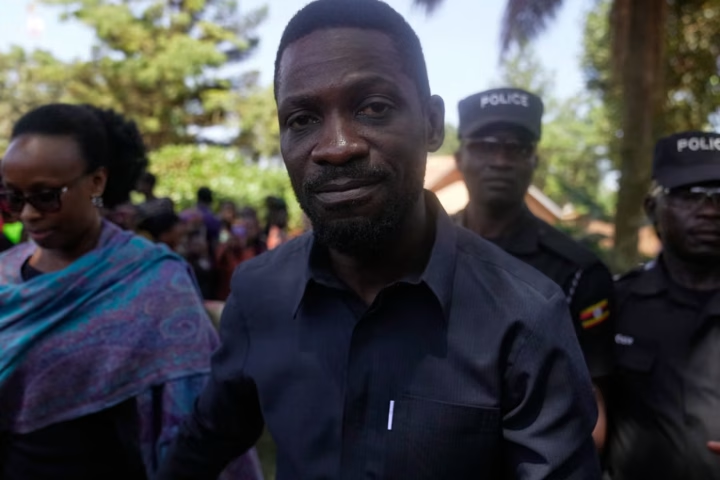
Tensions also rose after opposition sources claimed Wine had been placed under house arrest in Kampala. Police denied the accusation, stating instead that access to his residence was restricted due to security considerations. A police spokesperson said the measures were intended to prevent gatherings that could lead to unrest.
Uganda’s election featured eight presidential candidates, though none of the remaining contenders received more than two percent of the vote. Voter turnout stood at 52.5 percent, reflecting moderate participation amid heightened security and political polarization.
Throughout the campaign, Museveni positioned himself as the guarantor of stability in a country with a history of conflict. He highlighted infrastructure investment, regional security cooperation, and economic reforms as key achievements of his administration. Supporters argue that continuity under his leadership remains vital for Uganda’s growth.
Wine, by contrast, centered his campaign on anti-corruption reforms, expanded civil liberties, and youth empowerment. He repeatedly pointed to Uganda’s demographics, noting that a majority of the population is under 30, and framed the election as a generational choice about the country’s future.
Despite the disputes, the Electoral Commission maintained that the vote met legal standards. International attention is now focused on how the post-election period unfolds and whether political dialogue can ease tensions.
As Museveni begins another term, analysts say his government faces pressing challenges, including job creation, rising living costs, and rebuilding public trust after a divisive campaign. The president’s ability to address these issues while maintaining political stability will shape Uganda’s trajectory in the years ahead.