In the face of heightened diplomatic tensions and ongoing talks between Tehran and Washington over Iran’s nuclear ambitions, a senior Iranian official has firmly reiterated the country’s stance on its nuclear rights. The remarks come as the United States and Iran continue negotiations in Oman, with both sides seeking to address the controversial nuclear issue while navigating a complex web of sanctions and regional security concerns.
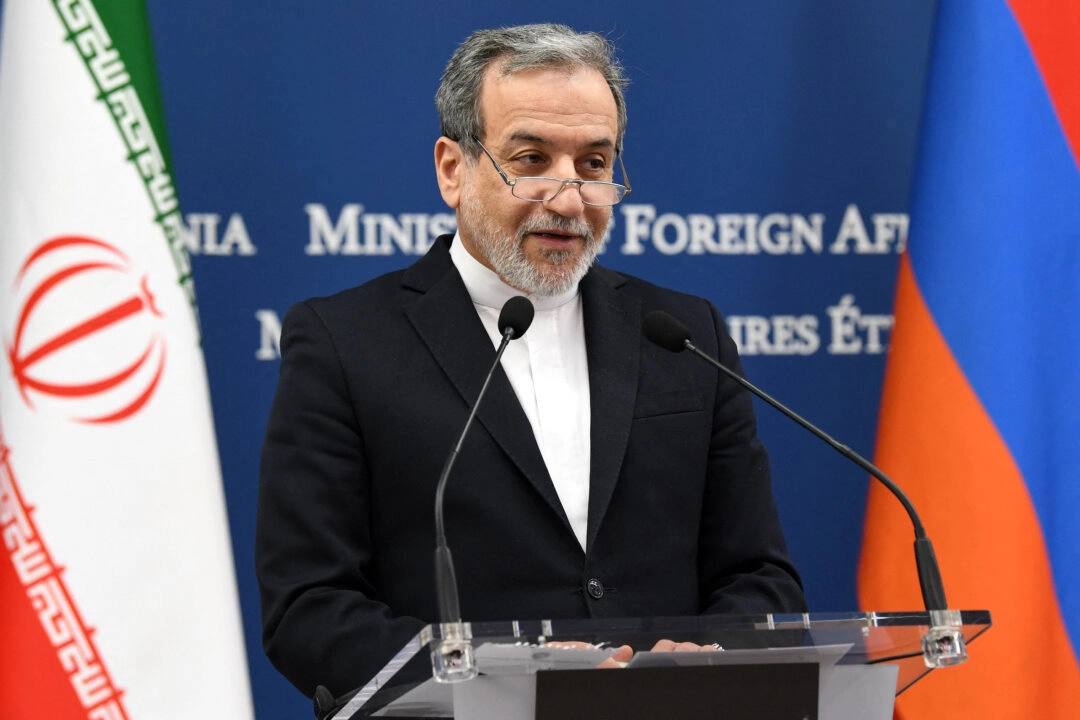
Abbas Araghchi, Iran’s Foreign Minister, underscored the country’s unwavering commitment to its nuclear program, emphasizing that Iran’s access to sophisticated nuclear enrichment technology is a symbol of national pride and scientific achievement. Speaking at a forum in Tehran, Araghchi made it clear that Iran would not relinquish its aspirations to continue nuclear enrichment under the guise of peaceful energy use.
“We have firmly stated the country’s positions in the past and in this meeting,” Araghchi said on social media. He added that the country’s technological advancements in nuclear enrichment are a product of Iran’s indigenous knowledge and the efforts of its scientists, stating, “This is a scientific achievement, a national pride, and it cannot be ignored within the framework of our right to peaceful use of nuclear energy.”
A Defiant Stance Amid US Military Presence
The Iranian Foreign Minister also addressed the ongoing U.S. military presence in the region, signaling that the presence of the USS Abraham Lincoln in the Arabian Sea did not intimidate Tehran. “Their military deployment in the region does not scare us,” Araghchi remarked, reinforcing Iran’s resolve in the face of external pressure. This statement came shortly after U.S. Special Envoy Steve Witkoff, who is participating in the talks, visited the aircraft carrier and expressed support for the U.S. military’s role in upholding the country’s interests.
Witkoff had shared a message on social media about meeting sailors and Marines stationed on the USS Abraham Lincoln, affirming that the ship’s presence in the region was part of the U.S.’s broader strategy of “peace through strength.” His post conveyed the U.S. commitment to maintaining readiness and deterring adversaries, adding another layer of complexity to the already tense negotiations between the two countries.
Diplomatic Efforts Continue: The Nuclear Deal at a Crossroads
The current diplomatic talks between the U.S. and Iran are centered on the country’s nuclear program, which has long been a point of contention on the global stage. While the U.S., Israel, and several European countries have raised concerns that Iran is seeking to develop nuclear weapons, Iran insists its nuclear activities are strictly for peaceful purposes, such as energy production and medical research.
The talks in Oman follow a series of earlier negotiations that have stalled due to disagreements over Iran’s uranium enrichment levels. Most civilian nuclear power plants enrich uranium to between 3 and 5 percent, but weapons-grade uranium requires enrichment to much higher levels. This divergence in positions has complicated discussions on how to limit Iran’s nuclear capabilities while addressing its desire for greater autonomy in its energy production.
Sanctions and Pressures: The U.S. Response
The U.S. government, which has imposed extensive sanctions on Iran to curb its nuclear program, continues to take a hard stance in its dealings with Tehran. President Donald Trump, in a recent interview, warned that Iran’s Supreme Leader, Ayatollah Ali Khamenei, should be “very worried” ahead of the talks. The U.S. has already issued new sanctions targeting Iran’s oil network, aimed at hindering Tehran’s ability to generate revenue that could be used to fund its military and proxy activities.
On February 6, the U.S. State Department issued a statement emphasizing its resolve to hold Iran accountable for its continued actions, particularly in evading sanctions and supporting activities deemed destabilizing in the region. The statement noted that “so long as the Iranian regime attempts to evade sanctions and generate oil and petrochemical revenues to fund oppressive behavior and support terrorism, the United States will act to hold both the Iranian regime and its partners accountable.”
Furthermore, the U.S. Virtual Embassy for Iran sent out an alert to American citizens living in Iran, urging them to leave the country via land-crossing points due to the heightened risks associated with the ongoing geopolitical tensions.
The Nuclear Non-Proliferation Treaty and Tehran’s Position
At the heart of Iran’s nuclear aspirations lies its commitment to the Nuclear Non-Proliferation Treaty (NPT), which it claims provides Iran with the right to develop nuclear energy for peaceful purposes. Iranian President Masoud Pezeshkian echoed this sentiment, stating that while Iran seeks to uphold its nuclear rights under the NPT, it also hopes for a constructive resolution in its dealings with the United States. “We view our discussions with the U.S. as a step forward,” Pezeshkian said, signaling that Tehran is open to diplomatic engagement while still holding firm to its nuclear goals.
This position comes amid growing skepticism in the international community, particularly over Iran’s past nuclear activities, which have raised alarms about the potential military applications of its nuclear program. While Iran insists that its intentions are peaceful, the possibility of weaponization remains a central concern for the U.S. and its allies.
A Rocky Road Ahead: U.S.-Iran Relations at a Crossroads
As the U.S. and Iran continue their high-stakes negotiations, the situation remains fluid, with both sides navigating a precarious balance of diplomacy and military readiness. The U.S. has made it clear that it is unwilling to lift sanctions or make significant concessions without concrete assurances from Iran that it will not pursue nuclear weapons. At the same time, Iran is adamant about maintaining its right to nuclear enrichment and securing a lifting of sanctions to improve its economy.
Tensions in the region are further complicated by the broader geopolitical dynamics, including the influence of external actors such as Israel and Russia, who have their own vested interests in the outcome of the talks. With the nuclear issue still unresolved, the international community watches closely to see whether a lasting agreement can be reached, or whether the standoff will escalate further.
The Future of Iran’s Nuclear Program
As the negotiations continue, the future of Iran’s nuclear program remains uncertain. While both sides have expressed a willingness to engage diplomatically, the core issues of uranium enrichment and the scope of Iran’s nuclear activities are proving to be formidable obstacles. Iran’s commitment to its nuclear rights under the NPT, paired with its desire to lift sanctions, suggests that a long-term solution may be far from reach.
Nevertheless, the ongoing talks represent an important step in the search for a peaceful resolution to one of the world’s most contentious and dangerous geopolitical issues. The outcome will have far-reaching implications, not only for Iran and the Middle East but for global security and the future of non-proliferation efforts worldwide.