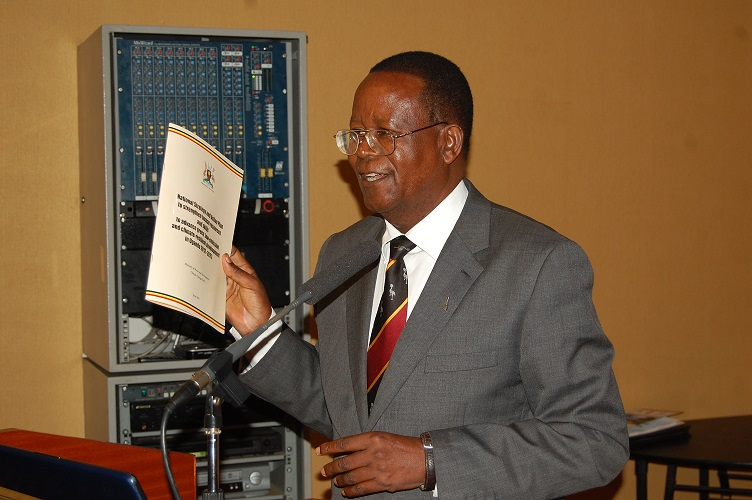
Ephraim Kamuntu has made a dramatic return to Uganda’s Cabinet at the age of 80 after President Yoweri Museveni appointed him Minister of Internal Affairs in the latest government reshuffle.
The appointment marks one of the most striking political comebacks in recent Ugandan politics and has reignited national debate over leadership renewal, succession planning, and the continued dominance of long-serving figures within the ruling establishment.
Kamuntu’s return stood out sharply in a reshuffle that simultaneously removed several senior historical figures from Cabinet, signaling both continuity and contradiction within Uganda’s evolving political landscape.
Museveni Turns Again to Veteran Allies
President Yoweri Museveni’s reshuffle saw several experienced ministers leave frontline government positions, including:
- Moses Ali
- Matia Kasaija
Yet even as some members of Uganda’s old political guard exited government, Museveni brought back one of the country’s most experienced political operators.
Kamuntu replaces:
- Kahinda Otafiire
who was moved to the Ministry of Water and Environment.
The decision is widely viewed as another sign of Museveni’s enduring preference for:
- Trusted allies
- Institutional loyalists
- Experienced administrators
particularly in strategically sensitive ministries.
Kamuntu Returns After Political Defeat and Recovery
The comeback is especially remarkable because only a few years ago, Kamuntu’s political career appeared to be nearing its conclusion.
In the 2021 elections, he lost the:
- Sheema South parliamentary seat
to:
- Elijah Dickens Mushemeza
in what many interpreted as a symbolic political retirement.
However, Kamuntu later reorganized politically, returned to active campaigning, and reclaimed the constituency during the 2026 general elections.
Only months after returning to Parliament, he has now re-entered Cabinet.
The turnaround demonstrates the resilience of Uganda’s long-established political networks and the continuing relevance of veteran politicians within the country’s power structure.
From Academia to Uganda’s Political Establishment
Before becoming a prominent government minister, Ephraim Kamuntu built a distinguished academic and economic career.
According to the report, Kamuntu lectured at:
- University of Nairobi
- Makerere University
where he contributed to the development of management and economic education.
He later pursued advanced studies in the United States in:
- Systems analysis
- Management science
- Business administration
His technocratic background helped shape his later roles in:
- Banking
- Economic liberalisation
- Public sector reform
during Uganda’s economic restructuring era in the 1990s.
Political Roots Trace Back to Idi Amin Era
Kamuntu’s political history stretches back to Uganda’s turbulent political period under:
- Idi Amin
During Amin’s rule, Kamuntu reportedly became associated with exile political movements opposed to the military government, including links to:
- Save Uganda Movement.
Like many figures from Museveni’s generation, his political evolution was deeply shaped by:
- Exile politics
- State instability
- Uganda’s liberation struggles
These historical networks later became central to the rise of the:
- National Resistance Movement (NRM)
which has governed Uganda for decades.
Kamuntu Built Reputation as Technocratic Minister
Since entering elective politics in 2001, Kamuntu has served in multiple senior ministries including:
- Tourism
- Water and Environment
- Finance Planning
- Industry
He became known for a relatively calm and technocratic leadership style compared with some of Uganda’s more confrontational political figures.
His tenure in tourism was especially visible, where he helped promote Uganda internationally as a travel destination.
Over the years, Kamuntu cultivated a reputation as:
- A policy-oriented administrator
- A disciplined insider
- A trusted government operator
rather than a populist political mobilizer.
Internal Affairs Portfolio Carries Major Influence
The:
- Ministry of Internal Affairs
is among Uganda’s most sensitive government portfolios.
The ministry oversees:
- Immigration
- National identity systems
- Citizenship matters
- Prison services
- Internal security coordination
The position becomes especially important ahead of national elections because of its connection to:
- Border management
- Population records
- State security structures
Kamuntu’s appointment therefore places him at the center of some of Uganda’s most strategically important state institutions.
Debate Over Generational Transition Intensifies
Kamuntu’s return at age 80 has intensified long-running discussions about:
- Leadership renewal
- Political succession
- Generational transition
within Uganda’s governing system.
Critics argue that Uganda’s political leadership remains heavily dominated by:
- Long-serving figures
- Historical liberation-era politicians
- Aging state elites
Supporters, however, contend that experienced leaders provide:
- Institutional continuity
- Administrative expertise
- Political stability
particularly during periods of regional and domestic uncertainty.
Uganda’s Political System Still Dominated by Historical Figures
The reshuffle highlights a recurring pattern in Uganda’s politics:
- The continued reliance on historical political actors
Despite ongoing public debate about generational change, many of Uganda’s most powerful institutions remain controlled by figures who have served for decades.
The latest appointments suggest Museveni continues prioritizing:
- Loyalty
- Experience
- Historical trust
when selecting senior officials.
Political Comeback Signals Continued Influence
Kamuntu’s reappointment demonstrates how veteran politicians in Uganda can remain politically relevant even after electoral defeats or apparent retirement.
His return to Cabinet also reflects:
- Deep political networks
- Institutional relationships
- Long-term party loyalty
that continue shaping power dynamics within the ruling establishment.
At an age when many political contemporaries have retired from public life, Kamuntu is instead assuming one of the country’s most powerful ministries.
Frequently Asked Questions
Who is Prof Ephraim Kamuntu?
Ephraim Kamuntu is a Ugandan economist, academic, and veteran politician.
What position was he appointed to?
He was appointed Uganda’s Minister of Internal Affairs.
How old is Prof Kamuntu?
He is 80 years old.
Which ministry did he previously serve in?
Kamuntu has served in several ministries including tourism, finance planning, and water and environment.
Why is his appointment significant?
His return highlights ongoing debates about leadership renewal and Museveni’s continued reliance on veteran political allies.
Conclusion
The return of Ephraim Kamuntu to Uganda’s Cabinet at the age of 80 marks one of the country’s most significant recent political comebacks.
While supporters see the appointment as a recognition of experience and institutional competence, critics argue it reflects the slow pace of generational transition within Uganda’s political system.
As President Yoweri Museveni continues reshaping his government ahead of future political contests, Kamuntu’s appointment underscores the enduring influence of Uganda’s long-serving political establishment even amid growing national conversations about renewal, succession, and the future of leadership.