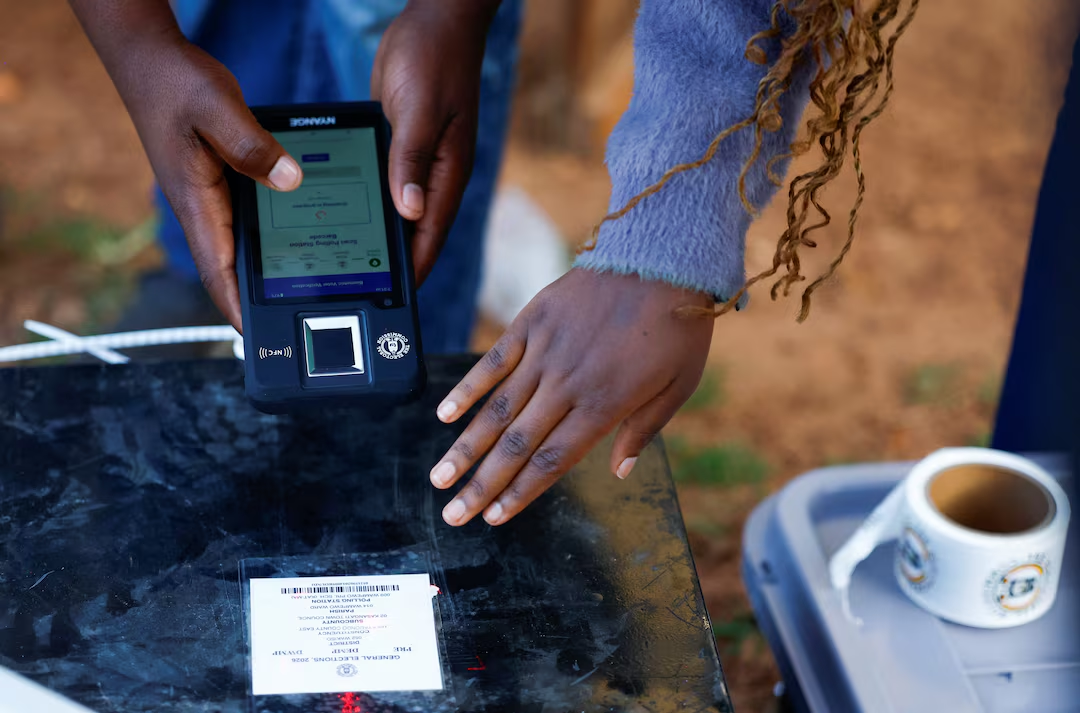
Ugandans voted on Thursday in a tense national election marked by fears of violence, an internet shutdown, and a heavy security presence. The vote is widely seen as a critical test of President Yoweri Museveni’s political strength as he seeks to extend his rule into a fifth decade.
The election follows an often violent campaign period and unfolds amid rising concern from international observers. Rights groups and the United Nations warn that repression and intimidation have shaped the political environment ahead of polling day.
Polls Open Under Heavy Police Presence
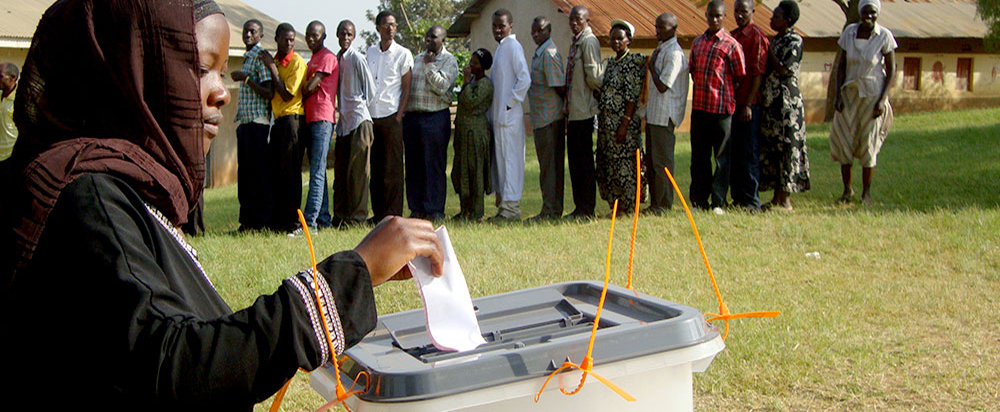
Polling stations opened in the capital Kampala under tight security. Police officers guarded major roads and polling centers, while security forces maintained visible patrols throughout the city.
Authorities also shut down internet access nationwide on Tuesday. Mobile data and social media platforms remained inaccessible as voters headed to the polls.
The government said the shutdown aimed to curb misinformation and prevent unrest. Critics described it as a deliberate move to limit transparency and restrict election monitoring.
Museveni Faces Familiar Challenger Bobi Wine
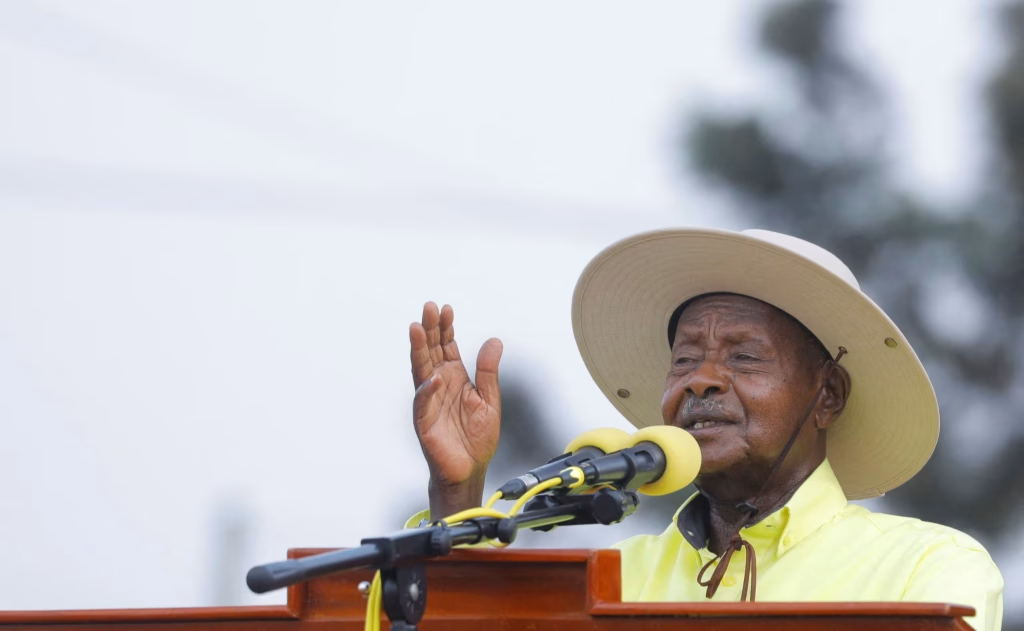
Museveni, 81, is expected to defeat his main challenger, Robert Kyagulanyi, better known as Bobi Wine. However, analysts say the vote measures the president’s ability to maintain stability and prevent unrest similar to recent upheavals in neighboring Kenya and Tanzania.
Museveni campaigned on a message of continuity. His slogan, “protecting the gains,” emphasized peace, security, and economic progress. He also pointed to plans to elevate Uganda into middle-income status.
At the same time, speculation continues over his eventual succession. Museveni has ruled Uganda since 1986 after leading a successful armed rebellion.
Bobi Wine Appeals to Young and Disaffected Voters
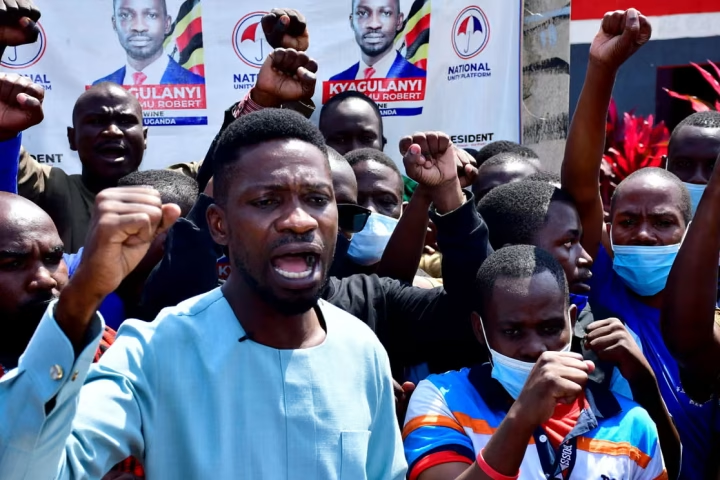
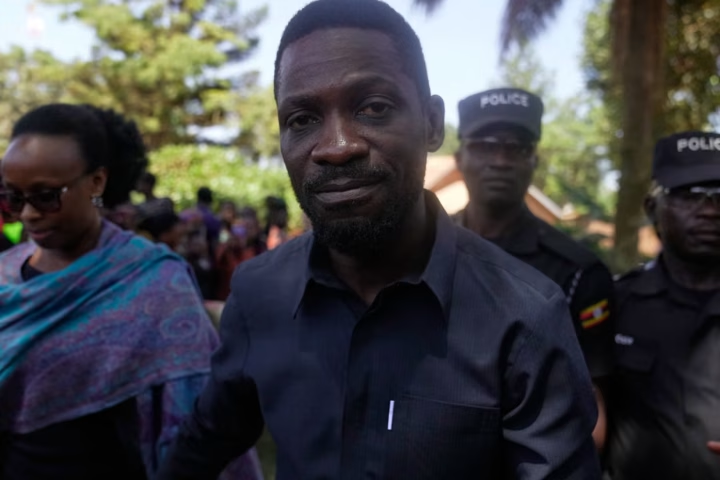
Bobi Wine, a 43-year-old pop star nicknamed the “Ghetto President,” has promised sweeping political change. He accuses Museveni of running a dictatorship and appeals strongly to young voters.
Uganda has one of the world’s youngest populations. The average age is just over 16. Many young Ugandans face high unemployment and limited economic opportunities.
Wine’s campaign focused on democracy, accountability, and jobs. However, security forces frequently disrupted his rallies during the campaign.
Violence and Arrests During the Campaign
Security forces repeatedly opened fire at Bobi Wine’s campaign events, killing at least one person and arresting hundreds of his supporters. Opposition figures say the violence aimed to intimidate voters and suppress turnout.
Museveni’s government defended the actions. Officials said security forces responded to lawless conduct by opposition supporters.
The UN Human Rights Office rejected that explanation. It warned last week that the elections were taking place amid “widespread repression and intimidation.”
Voters Express Fatigue With Long Rule
At polling stations, some voters voiced frustration with Uganda’s political trajectory. Ronald Tenywa, a 45-year-old university researcher voting in Kasangati township, criticized leaders who cling to power.
“If we vote for someone who cares, things will be better for Uganda,” he said, without naming a candidate.
Such sentiments reflect growing political fatigue after nearly four decades of Museveni’s rule.
Parliament Also at Stake
Beyond the presidency, voters are electing more than 500 members of parliament. Six other opposition candidates are also challenging Museveni in the presidential race.
Polls are scheduled to close at 4:00 p.m. local time. The constitution requires election results to be announced within 48 hours.
Observers say the vote-counting phase will be as critical as election day itself.
Museveni’s Grip on Power Remains Strong
Political analysts say an election upset remains unlikely. Museveni has amended the constitution twice to remove presidential age limits and term limits.
His dominance over state institutions, the military, and the ruling party gives him a decisive advantage. Africa now counts him as its third-longest-ruling head of state.
Despite domestic criticism, Museveni remains a key ally of Western nations.
Strategic Partner of the West
Museveni has positioned Uganda as a regional security anchor. His government has deployed troops to Somalia and other conflict zones.
Uganda also hosts millions of refugees, strengthening its standing with international donors.
Economic prospects further bolster Museveni’s case. Uganda expects a surge in growth when crude oil production begins later this year.
Projects led by TotalEnergies and CNOOC could push growth into double digits, according to government projections.
Legacy of Contested Elections
Museveni has faced repeated accusations of human rights abuses and electoral manipulation. His government has consistently denied the claims.
The United States condemned his 2021 re-election as neither free nor fair. That vote ended with security forces killing more than 50 opposition supporters in the lead-up to polling day.
Those events continue to shape public and international perceptions of Uganda’s electoral process.
A Defining Test for Stability
As voting continues, attention will shift to turnout, counting, and result transmission. Observers say Museveni’s challenge is not simply winning, but maintaining calm.
For Uganda, the election represents more than a political contest. It is a test of stability, legitimacy, and the future direction of a country at a critical economic and demographic crossroads.