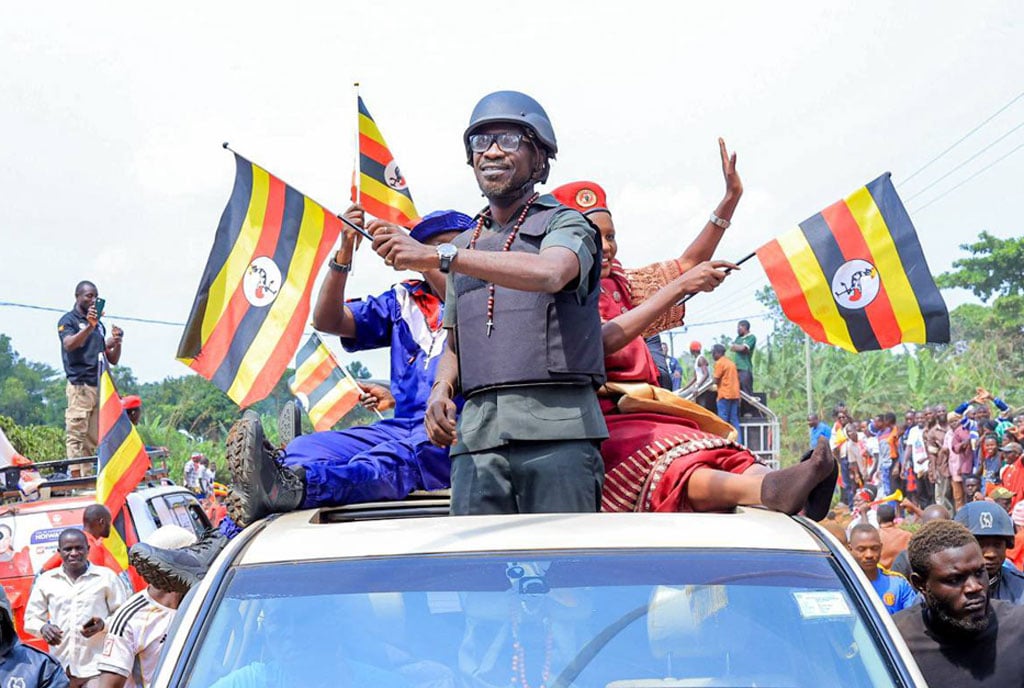
Uganda’s political turmoil has escalated dramatically in the days following the controversial presidential election on January 15, 2026. Opposition leader Bobi Wine, a former musician turned politician, has been on the run from the Ugandan military, which has launched an aggressive hunt to capture him. The situation has ignited a public feud between Wine and Gen. Muhoozi Kainerugaba, Uganda’s army chief and President Yoweri Museveni’s son, further intensifying the already fraught political climate.
Bobi Wine in Hiding: A Symbol of Resistance
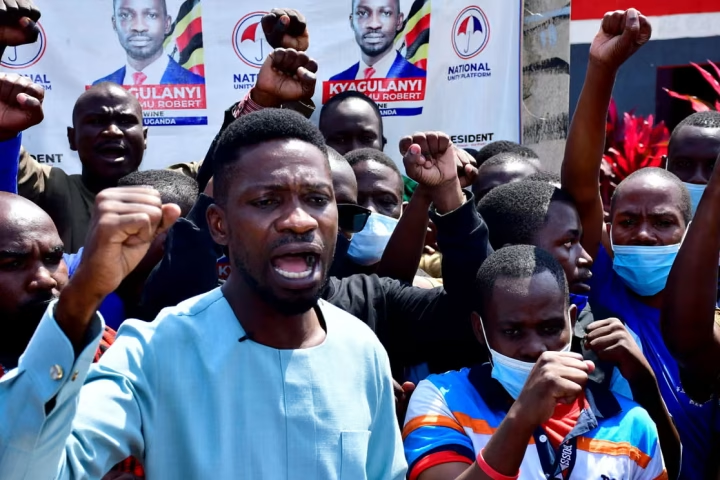
Bobi Wine, whose real name is Robert Kyagulanyi Ssentamu, has been one of the most prominent critics of Museveni’s administration, running for president multiple times and challenging the president’s grip on power. However, following the disputed election, in which President Museveni was declared the winner with 71.6% of the vote, Wine went into hiding, fearing for his safety. He has expressed his rejection of the election results, accusing the government of rigging the vote and violating democratic principles.
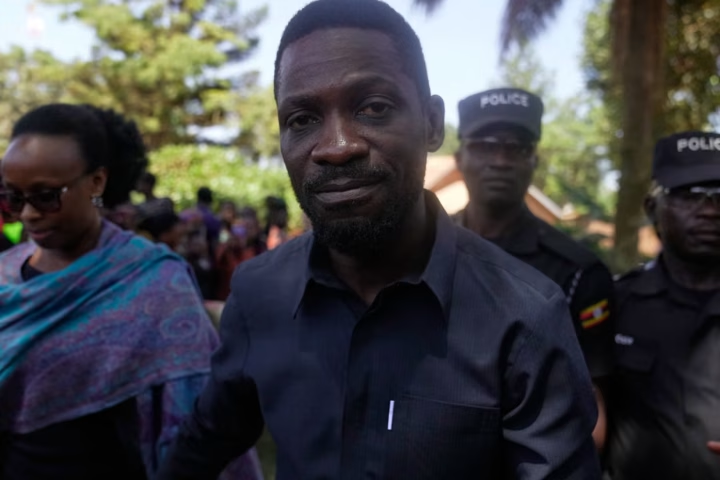
In a video shared from his hideout, Wine taunted the Ugandan army, which has been searching for him relentlessly, mocking them for failing to capture him. “The whole army is looking for one person. It’s now coming to 10 days, but they have failed to find me,” Wine said in the video. “That means they are not as strong as they tell you.” His ability to evade the army has only fueled his narrative of a government that is crumbling under pressure, and his words have resonated with many Ugandans who feel disenfranchised and dissatisfied with Museveni’s rule.
Wine’s comments about the strength of the Ugandan military—highlighting its inability to find one man—serve as both a critique of the government’s power and a rallying cry for those who seek political change in the country. Wine’s supporters, particularly among the youth, have rallied behind him, with many seeing him as the leader of a new wave of political opposition against the entrenched leadership of Museveni, who has been in power for nearly four decades.
Gen. Kainerugaba’s Aggressive Pursuit and Personal Attacks
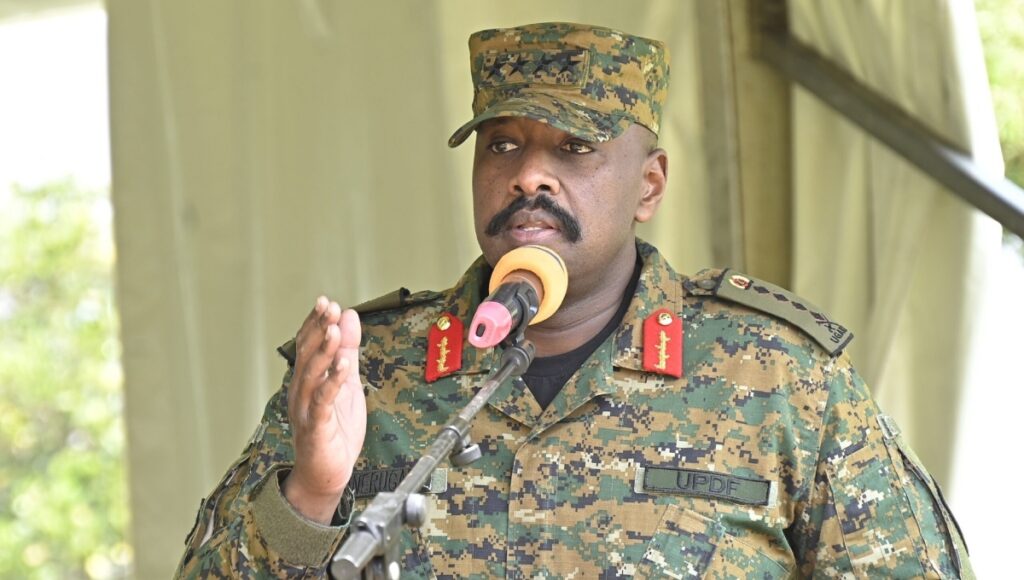
Gen. Muhoozi Kainerugaba, who is seen by many as the presumptive heir to Museveni’s presidency, has responded fiercely to Wine’s public defiance. In a series of posts on X (formerly Twitter), Kainerugaba has labeled Wine a “coward” and a “terrorist,” vowing that the opposition leader would be captured “dead or alive.” The military chief has used derogatory terms to refer to Wine, calling him “Kabobi,” a mocking twist on Wine’s name. His inflammatory rhetoric has only fueled the already high political tensions in the country, making it clear that the government views Wine’s resistance as a direct challenge to its authority.
Kainerugaba’s remarks and his call for Wine to be captured have raised concerns among opposition groups and human rights organizations, who fear that such rhetoric could incite violence and unrest. The stakes are high, as Wine’s popularity has surged in recent years, particularly among younger Ugandans who are frustrated with the lack of economic opportunities, widespread corruption, and a government that they see as out of touch with the needs of the people.
The Raid on Wine’s Home: Allegations of Brutality
Tensions further escalated on January 23, 2026, when Ugandan soldiers raided the home of Bobi Wine. His wife, Barbara Kyagulanyi (affectionately known as Barbie), was reportedly attacked by the soldiers during the raid. She claims that the soldiers, who were wearing masks and armed with rifles, broke down doors and windows to search for Wine. Barbie says she was physically lifted off the floor by her pajamas, and one soldier allegedly banged her head against a pillar while demanding the password to her phone.
Barbara Kyagulanyi was hospitalized for anxiety and bruises following the assault, a situation that has drawn widespread condemnation from both local and international human rights groups. Gen. Kainerugaba, however, denied the allegations, claiming that no physical harm was done to Barbara. “My soldiers did not beat Barbie,” he wrote on X, insisting that the army was solely searching for her husband and that she was not the target of the raid.
The incident has sparked outrage among opposition groups, who see it as another example of the regime’s use of force to intimidate and suppress political opposition. It has also highlighted the vulnerability of Wine’s family, who have been caught in the crossfire of the government’s crackdown on dissent.
Political and Legal Implications: A Nation on Edge
The hunt for Bobi Wine comes at a time of heightened political and social unrest in Uganda. The January 15 election, which saw President Museveni secure a controversial victory, was marred by allegations of fraud and widespread voting irregularities. The opposition, led by Wine and his National Unity Platform (NUP) party, has rejected the results, claiming that the election was rigged in favor of the incumbent. The allegations have been compounded by the widespread use of the military and security forces to monitor the election and suppress opposition activities.
Wine’s continued evasion of the military has become a symbol of defiance, as he taunts the government for its inability to find him despite the overwhelming resources at its disposal. His claim that the government is weak and vulnerable resonates with many Ugandans who are frustrated with the political status quo. His followers, particularly in urban areas, have expressed support for his stance, seeing him as a leader who represents change in a country that has been governed by the same family for decades.
Meanwhile, the Ugandan government has continued to label Wine and his supporters as troublemakers and terrorists, with Kainerugaba’s inflammatory rhetoric further deepening the divide between the ruling party and the opposition. The government’s actions, including the violent raid on Wine’s home and the ongoing hunt for his capture, have raised serious concerns about the erosion of civil liberties and the suppression of political dissent in Uganda.
A Divided Nation and the Call for Change
Bobi Wine’s political journey has been defined by his fight against President Museveni’s regime. Wine, who has become a powerful voice for Uganda’s youth, represents a movement that is calling for political change, economic reform, and an end to corruption. His popularity among young people, particularly those disillusioned with the lack of opportunities and government accountability, has made him a significant threat to Museveni’s long-standing grip on power.
However, the ongoing pursuit of Wine by the military and the regime’s crackdown on opposition figures have raised fears of escalating violence and instability in Uganda. Many observers worry that the situation could spiral out of control, especially if the military is ordered to use force to capture Wine or suppress further protests.
The International Response: Concerns Over Human Rights
The international community has expressed concern over the situation in Uganda, with human rights organizations calling for an end to the persecution of opposition leaders and activists. The United States and European Union have both raised concerns about the conduct of the election and the treatment of political opponents in Uganda. The U.S. State Department has condemned the use of military force against civilians, and international human rights groups have called for the immediate release of Bobi Wine and other political prisoners.
The increasing pressure from the international community, coupled with the growing unrest within Uganda, has placed the Museveni government in a difficult position. While the government maintains that Wine is a criminal, the mounting calls for political reform and respect for human rights cannot be ignored.
As the military hunt for Bobi Wine continues, the future of Uganda’s political landscape remains uncertain. With tensions between the opposition and the government at an all-time high, the country stands on the brink of a pivotal moment in its history.
RELATED ARTICLE:Tensions Escalate as Uganda’s Army Chief Accuses U.S. Embassy of Aiding Opposition Leader Bobi Wine