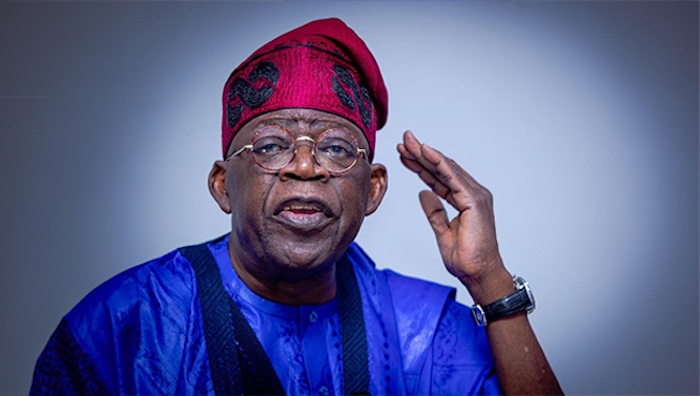
Nigeria has renewed its commitment to significantly expand crude oil production over the next five years, with President Bola Ahmed Tinubu restating the country’s target of reaching 3 million barrels per day (bpd) by 2030. The renewed push is anchored on sweeping sector reforms, rising upstream activity, and a deliberate strategy to rebuild investor confidence across the oil and gas industry.
The President made the position known in Abuja during the 9th Nigeria International Energy Summit (NIES), held under the theme “Energy for Peace and Prosperity: Securing Our Shared Future.” Tinubu, who was represented at the summit by Vice President Kashim Shettima, said his administration inherited an oil and gas sector weakened by inefficiencies, regulatory ambiguity, and years of underinvestment, but emphasized that decisive policy actions were now reversing the trend.
According to Tinubu, energy remains central to Nigeria’s national stability and economic ambitions. He described reliable, affordable, and accessible energy as essential not only for growth but also for security and social cohesion. He pointed to the full implementation of the Petroleum Industry Act (PIA) as a turning point that has introduced regulatory clarity, improved governance, and restored credibility to Nigeria’s energy framework.
The President highlighted transparent and competitive licensing rounds introduced by his administration, describing them as some of the most credible in the nation’s history. These reforms, he said, have reignited upstream activity, with rig counts climbing sharply and final investment decisions crossing $8 billion in major oil and gas projects.
Nigeria’s average crude oil output has already improved to about 1.6 million barrels per day, driven in part by targeted initiatives such as Project One Million Barrels Per Day. Tinubu noted that the government is working toward an interim production level of 2.5 million bpd by 2027, with a longer-term ambition of producing 3 million bpd of liquid hydrocarbons and 12 billion cubic feet of gas per day by 2030.
The gas sector featured prominently in the administration’s energy strategy. Tinubu described natural gas as Nigeria’s strategic transition fuel, noting that domestic gas supply has exceeded 2 billion cubic feet per day for the first time. This milestone, he said, has strengthened power generation, boosted industrial output, and expanded energy access nationwide.
Export volumes have also risen, supported by expanded gas processing and transportation infrastructure, reinforcing Nigeria’s standing in regional and global gas markets. On the downstream front, Tinubu pointed to the commencement of full operations at the Dangote Petroleum Refinery as a major shift toward domestic self-sufficiency in refined petroleum products. He added that the rehabilitation of state-owned refineries is progressing, while modular refineries continue to advance under supportive regulatory conditions.
The President acknowledged that reforms such as fuel subsidy removal and foreign exchange liberalisation have been challenging, but insisted they were necessary to restore market efficiency and ensure long-term sustainability in the energy sector.
Providing further insight into the government’s strategy, the Minister of State for Petroleum Resources (Oil), Senator Heineken Lokpobiri, said Nigeria is now firmly positioned as an investment-ready destination following extensive legal, regulatory, and fiscal reforms. He recalled that the sector was struggling at the start of the current administration, with declining output and stalled investments, but said the PIA has delivered a stable fiscal framework that supports long-term planning.
Lokpobiri explained that cost-efficiency incentives introduced through the upstream petroleum operations framework have reduced operating expenses by offering targeted tax credits, improving Nigeria’s competitiveness. He said Project One Million Barrels Per Day has delivered rapid gains, pushing production to between 1.7 and 1.83 million bpd, while active rig counts rose from just 14 in 2023 to over 60.
He cited major final investment decisions as clear signals of renewed international confidence, including Shell’s $5 billion Bonga North project and TotalEnergies’ Ubeta development. According to Lokpobiri, four of the seven major final investment decisions announced across Africa between 2024 and 2025 occurred in Nigeria, underscoring the country’s resurgence as a preferred energy investment hub.
Lokpobiri also highlighted the successful transfer of onshore and shallow-water assets from international oil companies to indigenous operators, a process that added roughly 200,000 barrels per day to national output. He said the removal of fuel subsidies has stabilised product availability and encouraged private investment in refining and downstream infrastructure.
On the gas front, the Minister of State for Petroleum Resources (Gas), Ekperikpe Ekpo, reaffirmed the central role of natural gas in Nigeria’s energy security and economic transformation. He said the government is pursuing a pragmatic transition that balances climate responsibility with development priorities.
Ekpo disclosed that gas production averaged between 7.5 and 7.6 billion standard cubic feet per day in 2025, while gas flaring declined to some of the lowest levels recorded in recent years. Expanded pipeline networks, processing facilities, and gas-to-power projects have improved domestic utilisation and supply reliability, with the government targeting 10 billion standard cubic feet per day in gas production by 2030.
The summit attracted African leaders, global energy companies, investors, and development partners. Among those present were President Adama Barrow of The Gambia and President Teodoro Obiang Nguema Mbasogo of Equatorial Guinea, who was represented at the event.
Speaking at the summit, NNPC Group Chief Executive Officer, Bayo Ojulari, described Nigeria as an emerging global energy powerhouse with a responsibility to deploy its abundant gas resources to drive Africa’s development and contribute to global stability. He said gas lies at the heart of Nigeria’s long-term strategy, serving as a bridge to cleaner energy, a catalyst for industrialisation, and a foundation for export-led growth.
Ojulari drew attention to what he termed Africa’s “energy trilemma” – accessibility, affordability, and sustainability – noting that more than 600 million Africans still lack access to electricity despite the continent’s vast resource base. With 37 billion barrels of crude oil and 209 trillion cubic feet of gas reserves, he said Nigeria is positioned to lead efforts to change that narrative.
He explained that NNPC has launched a new Gas Masterplan and is accelerating strategic infrastructure projects, including the Obiafu-Obrikom-Oben (OB3) pipeline, the Ajaokuta-Kaduna-Kano (AKK) gas pipeline, and the Escravos-Lagos Pipeline System (ELPS) expansion. According to him, these projects are economic corridors designed to unlock industrial growth rather than just transport fuel.
From the private sector perspective, Adegbite Falade, Chairman of the Independent Petroleum Producers Group and Managing Director of Aradel Holdings, urged the federal government to urgently tackle bureaucratic bottlenecks and streamline multiple fees and charges confronting operators. While acknowledging improvements driven by recent policy reforms, he said excessive costs and regulatory overlaps still undermine competitiveness.
Falade stressed the importance of enabling private capital to build industry infrastructure, improving access to long-term and affordable financing, and maintaining policy stability. He applauded the establishment of the Africa Energy Bank, urging authorities to sustain momentum and ensure effective implementation of the PIA through transparent and predictable regulatory institutions.
At the continental level, the African Petroleum Producers Organisation (APPO) unveiled ambitious plans for the $5 billion Africa Energy Bank, which will be headquartered in Nigeria and is expected to commence operations by May 2026. APPO Secretary General Farid Ghezali said the bank aims to mobilise $200 billion to support Africa’s gas transition and energy transformation by 2030 and beyond.
Ghezali explained that the bank will raise $15 billion within its first three years by listing shares of major national oil companies and flagship projects, including infrastructure such as refineries and pipelines. He said the initiative would unify intra-African oil and gas pricing, reduce import costs by up to 30 per cent, and unlock potential savings of $1.4 billion across the continent.
He outlined a three-phase roadmap that begins with the launch of the bank platform in 2026, followed by regional oil and gas trade integration in 2027, and culminating in the establishment of a fully-fledged African financial hub by 2030. The plan includes project financing worth billions of dollars, creation of 500,000 direct jobs, and stronger links to sovereign wealth funds and global capital markets.
Ghezali noted that financing remains the biggest constraint facing Africa’s energy ambitions, with more than 150 critical projects currently stalled due to high borrowing costs of 15–20 per cent, compared to 4–6 per cent in Asia. He argued that successful projects like the Dangote Refinery demonstrate Africa’s ability to attract capital once risks are properly managed and frameworks aligned.
He proposed an Abuja Pact, a collective commitment by Nigeria and APPO member states to fully operationalise the Africa Energy Bank and position Nigeria as a central hub for energy financing on the continent.