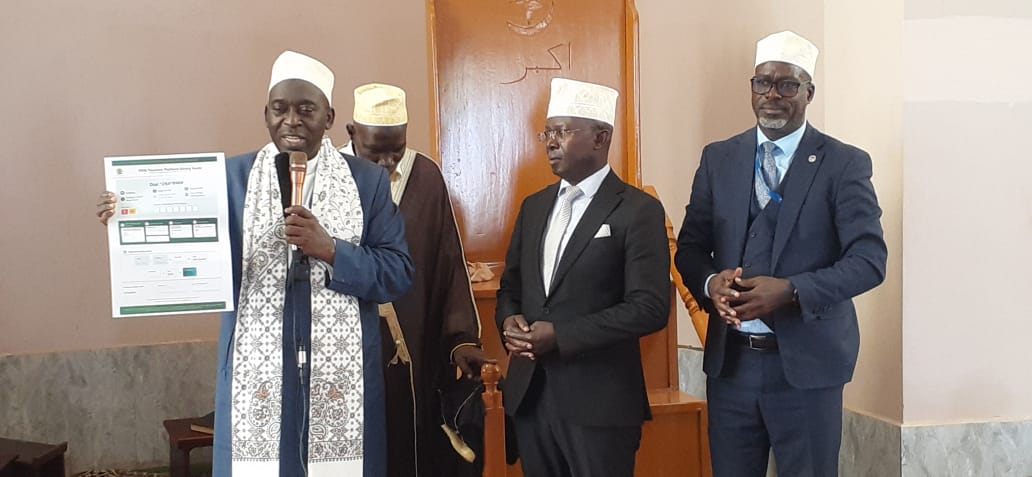
Sheikh Mohamed Galabuzi, the Supreme Mufti of Uganda, has launched a groundbreaking initiative aimed at revolutionizing Islamic charitable giving in Uganda. The digital Deen Fund, introduced in Nakifuma, Mukono District, seeks to modernize the traditional methods of Islamic donations by utilizing mobile technology to facilitate contributions. This initiative is designed to enhance transparency, streamline the donation process, and promote equal participation in supporting Islamic causes, particularly among youth and women.
Revamping Islamic Charity with Digital Innovation
The Deen Fund’s digital platform represents a significant shift in how Muslims in Uganda approach charitable giving. By moving away from the conventional mosque-based collection methods, which often led to inefficiencies and financial losses, the digital platform offers a more secure, transparent, and accountable system. The move comes at a time when there is growing demand for modernization across various sectors of society, and Sheikh Galabuzi sees this as an opportunity to create a sustainable and inclusive system for Islamic charity in Uganda.
The launch event, which took place in the scenic Nakifuma, Mukono District, was marked by an engaging session of community sensitization. During the event, local Muslims were educated on the importance of charitable giving and trained on how to use mobile phones to make donations through the new digital platform. The goal was to ensure that every participant, regardless of their location, could easily contribute to the cause.
Sheikh Galabuzi stressed that the introduction of the Deen Fund was not only aimed at simplifying the donation process but also at reducing the financial burden on a few individuals who have traditionally borne the brunt of the contributions. The digital system allows for small, consistent donations from a larger pool of Muslims, making it easier for everyone to play a part in supporting their community.
Partnering for Security and Accountability
One of the key elements of the Deen Fund’s launch was a partnership with Centenary Bank, a major player in Uganda’s banking sector. Rashid Musisi Semanda, the Chief Manager for Corporate and SME Banking at Centenary Bank, emphasized the importance of secure financial management in this initiative. The bank’s involvement ensures that all funds raised through the digital platform are securely banked, tracked, and properly accounted for, guaranteeing the integrity of the donations.
“This partnership is essential for the safe handling of funds,” said Semanda, highlighting that the bank’s robust infrastructure would play a key role in ensuring the proper use of the contributions. By working with Centenary Bank, the Deen Fund aims to set a standard for other organizations looking to use technology to manage donations and increase transparency in fundraising.
Empowering Youth and Women through the Fund
In his speech, Sheikh Abdnoor Kakande, the Greater Mukono Supreme Khadhi, praised the leadership of Kibuli for selecting Mukono as the launch site for the Deen Fund. He called on local Muslims to fully support the initiative and participate actively in the digital giving process. Kakande’s endorsement was echoed by Dr. Muhamed Kigundu, the Head of Information at Kibuli, who noted the significance of this modernized approach to Islamic charity.
“Islam in East Africa has traditionally been slow to embrace technological advancements in fundraising, which has sometimes hindered the growth of charitable efforts,” Dr. Kigundu explained. He pointed out that the outdated mosque-based collection system, while well-intentioned, had often led to mismanagement and financial losses, which is why the transition to a digital system was necessary.
The Deen Fund, as outlined by Dr. Kigundu, is not just a vehicle for fundraising but also a strategic effort to direct resources toward specific groups in need. The fund will be used to finance programs that support youth business initiatives, pay for school fees, and cover medical expenses for those in need. One of the key focuses of the fund is to empower women, ensuring they have access to the resources and opportunities necessary for their economic and social development.
A Vision for Mass Participation and Long-Term Impact
Sheikh Galabuzi has set ambitious goals for the Deen Fund, projecting that with the participation of one million Muslims, the fund could raise over Shs 3 billion annually. This level of financial contribution would have a transformative impact on the community, enabling the funding of large-scale social programs that address education, healthcare, and economic empowerment. By leveraging mobile technology, Sheikh Galabuzi believes the initiative can reach Muslims across the country, ensuring that no one is left out of the charitable giving process.
The Supreme Mufti also emphasized the importance of consistent giving. He pointed out that small, regular contributions from a large number of people would allow Islamic activities to continue smoothly without placing an undue burden on a few individuals. This approach is designed to foster a culture of collective responsibility and generosity, making it easier for Muslims of all backgrounds to participate in charitable work.
In his closing remarks, Sheikh Galabuzi encouraged parents to instill the value of charity in their children. He stressed that by teaching the next generation the importance of giving, they would help ensure the sustainability of the Deen Fund and other charitable initiatives in the future.
Broader Implications for Islamic Charity in Uganda
The launch of the digital Deen Fund represents a broader shift in how Islamic charity is viewed and practiced in Uganda. By modernizing the system of giving and incorporating technology, the initiative seeks to empower individuals, reduce inequalities, and create a more inclusive environment for Muslims to support their community. It also demonstrates the potential for digital tools to revolutionize philanthropy across the country and beyond, opening new opportunities for social good.
As the Deen Fund begins to take root, it is expected that other religious and charitable organizations in Uganda will look to adopt similar models, further driving the growth of digital giving in the region. This transformation could play a crucial role in addressing some of the country’s most pressing social issues, ensuring that resources are used efficiently and that those in need receive the support they require.
By embracing technology, Sheikh Galabuzi and the leaders of the Kibuli administration are setting a powerful example of how faith and innovation can come together to create meaningful change in society.