Uganda’s presidential election appears to be moving toward a familiar outcome, with President Yoweri Museveni taking a commanding lead in the vote count even as his main challenger, Bobi Wine, rejects the results and accuses authorities of fraud, repression, and violence.
With vote counting still under way, the election has been overshadowed by an internet blackout, heavy security deployments, disputed killings of opposition supporters, and allegations that the opposition leader has been placed under house arrest. Together, these developments have deepened concerns about the credibility of the process and the state of democracy in Uganda.
Museveni Builds a Decisive Lead
According to provisional figures released by the Electoral Commission, Museveni has secured around 75 percent of the vote, compared with about 21 percent for Bobi Wine. The results are based on returns from roughly 70 percent of polling stations nationwide.
At 81 years old, Museveni is seeking a seventh term in office, which would extend his rule to more than four decades. Having first taken power as a rebel leader in 1986, he has since won every presidential election held under Uganda’s current political system.
Analysts say the scale of Museveni’s lead is consistent with previous elections, where strong rural support and the advantages of incumbency have offset opposition strength in urban areas.
Bobi Wine Rejects Results and Alleges Fraud
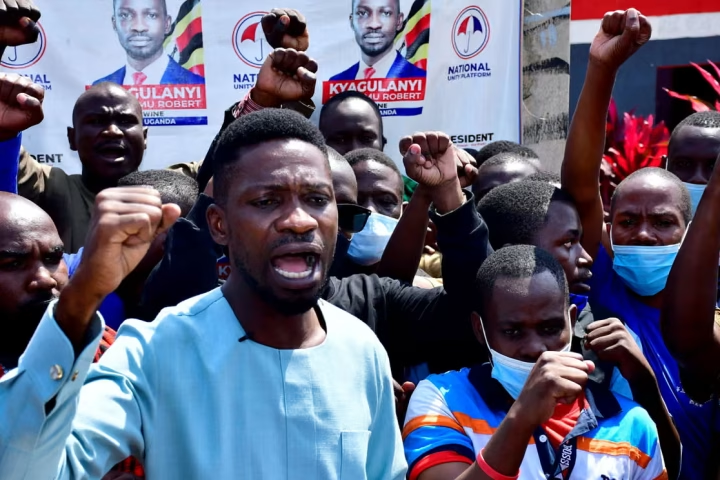
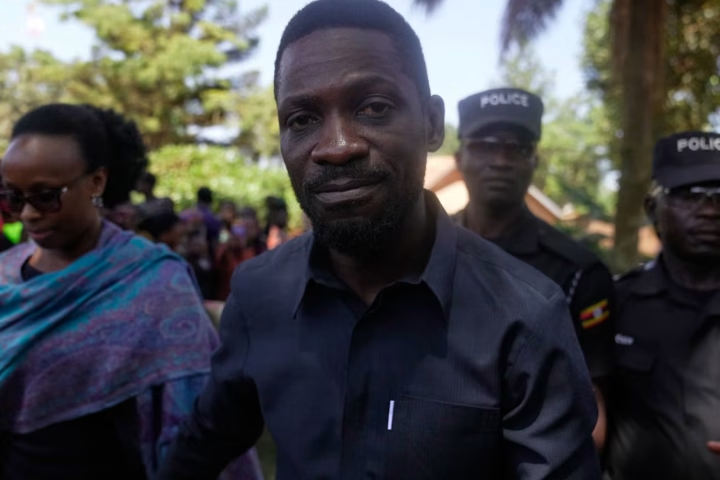
Bobi Wine, a 43-year-old pop star-turned-politician whose real name is Robert Kyagulanyi, has dismissed the provisional figures as “fake results” and urged supporters not to accept them.
Wine says security forces have surrounded his home in the Magere area of Kampala, effectively placing him under house arrest. In a statement posted on X, he accused the authorities of besieging his residence to prevent public reaction to what he described as a stolen election.
Police spokesperson Kituuma Rusoke said Wine was “a person of interest” because of his status as a presidential candidate, adding that the heavy security presence was for his own protection. He denied knowledge of a formal house arrest order.
Wine was similarly confined to his home for several days following the disputed 2021 election.
Deadly Overnight Violence in Butambala
Tensions escalated further after at least seven opposition supporters were killed overnight in the town of Butambala, about 55 kilometres southwest of Kampala. The circumstances surrounding the deaths remain sharply disputed.
Opposition MP Muwanga Kivumbi, from Wine’s National Unity Platform, told international media that soldiers and police fired tear gas and then live bullets at hundreds of people who had gathered at his home to follow early election results. He claimed that up to ten people were killed inside his compound.
Human rights activist Agather Atuhaire corroborated this account.
Police spokesperson Lydia Tumushabe, however, rejected those claims, saying officers acted in self-defence after what she described as an attack by armed opposition supporters on a police station and a planned attempt to overrun a tallying centre. She said the attackers were carrying machetes, axes, and boxes of matches.
Independent verification of the events has been difficult, partly due to restricted access and the internet shutdown.
Heightened Security and International Concern
In response to reports of unrest, security has been tightened across the country. Later on Friday, the United States Embassy issued an alert to its citizens warning that security forces were using tear gas and firing into the air to disperse gatherings.
Local journalists reported being blocked from accessing Bobi Wine’s home, while others said security forces were preventing movement in parts of Kampala and other urban centres.
Internet Blackout and Voting Delays
Ugandans voted under a nationwide internet shutdown imposed earlier in the week by the Uganda Communications Commission, which said the move was necessary to prevent misinformation, fraud, and incitement to violence.
The blackout has been widely criticised by civil society groups and the United Nations Human Rights Office, which described it as “deeply worrying” and harmful to transparency.
Election day itself was marred by logistical problems. In some areas, voting was delayed by up to four hours due to late delivery of ballot boxes and malfunctioning biometric voter verification machines. Some observers have linked these problems to the network outage.
Electoral Commission Defends Process
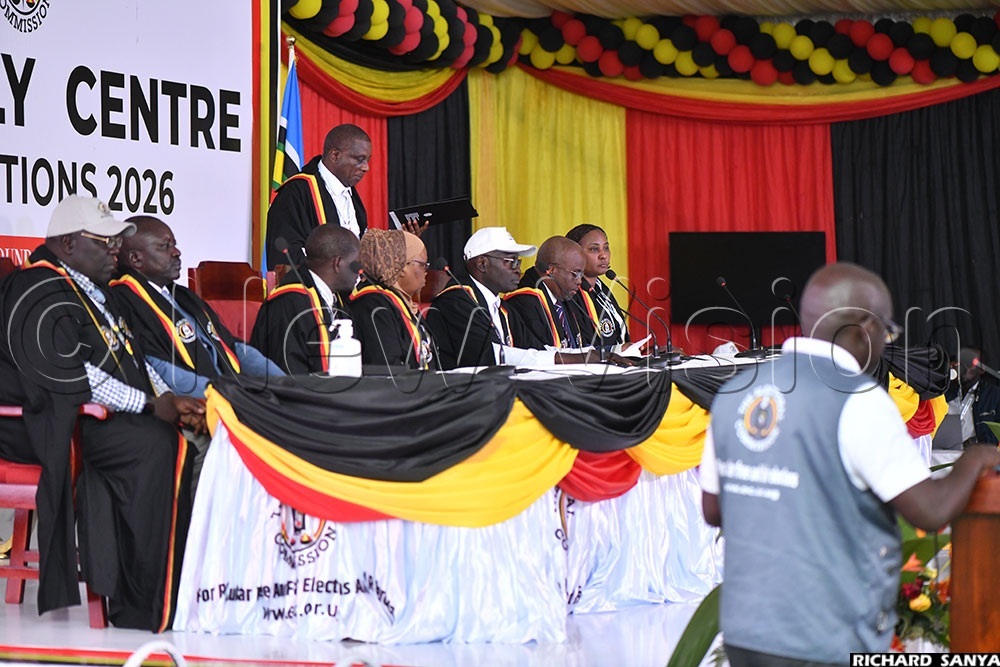
Electoral Commission chair Simon Byabakama said the internet blackout had not affected the tallying process, explaining that the commission was using a private system to transmit results from districts to the national tally centre.
He said the commission expected to announce the final presidential results within 48 hours, likely by Saturday afternoon.
A Two-Horse Race in a Divided Country
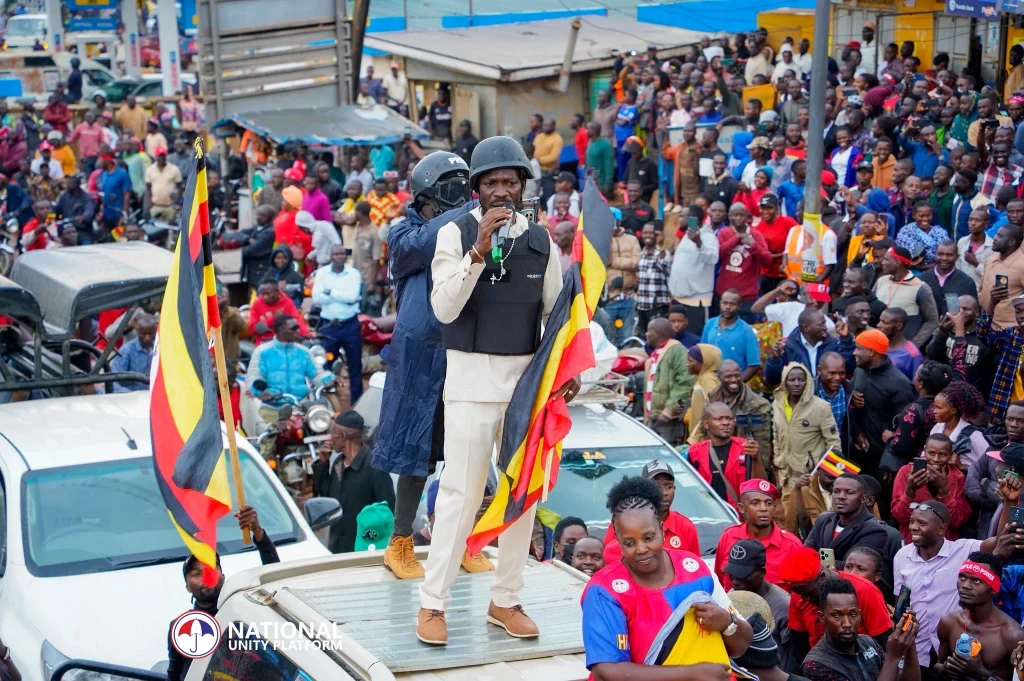
Although there are six other candidates, the election has effectively been a two-horse race between Museveni and Wine. Wine has campaigned as the voice of Uganda’s youth, arguing that he represents a generation frustrated by corruption, unemployment, and political exclusion in a country where most people are under 30.
Museveni, by contrast, has portrayed himself as the sole guarantor of stability and progress, warning that change could plunge the country into uncertainty.
What Comes Next
If the provisional results are confirmed, Museveni will extend one of the longest-running presidencies in Africa. Yet the election has once again highlighted deep divisions within Ugandan society and raised questions about the country’s democratic future.
With violence reported, opposition leaders confined, and allegations of fraud unresolved, Uganda now faces a tense post-election period—one that will test its institutions, its security forces, and its ability to manage political dissent without further bloodshed.