Uganda’s 2026 election campaign has been anything but routine. While elections in the country are often marked by heavy security, state dominance, and restricted opposition activity, this cycle stood out for its symbolism, intensity, and unexpected twists. From flak jackets and jailed opponents to digital shutdowns and internal regime tensions, the road to the 15 January vote revealed a political system under visible strain.
Here are 10 defining moments that shaped one of Uganda’s most unusual election campaigns.
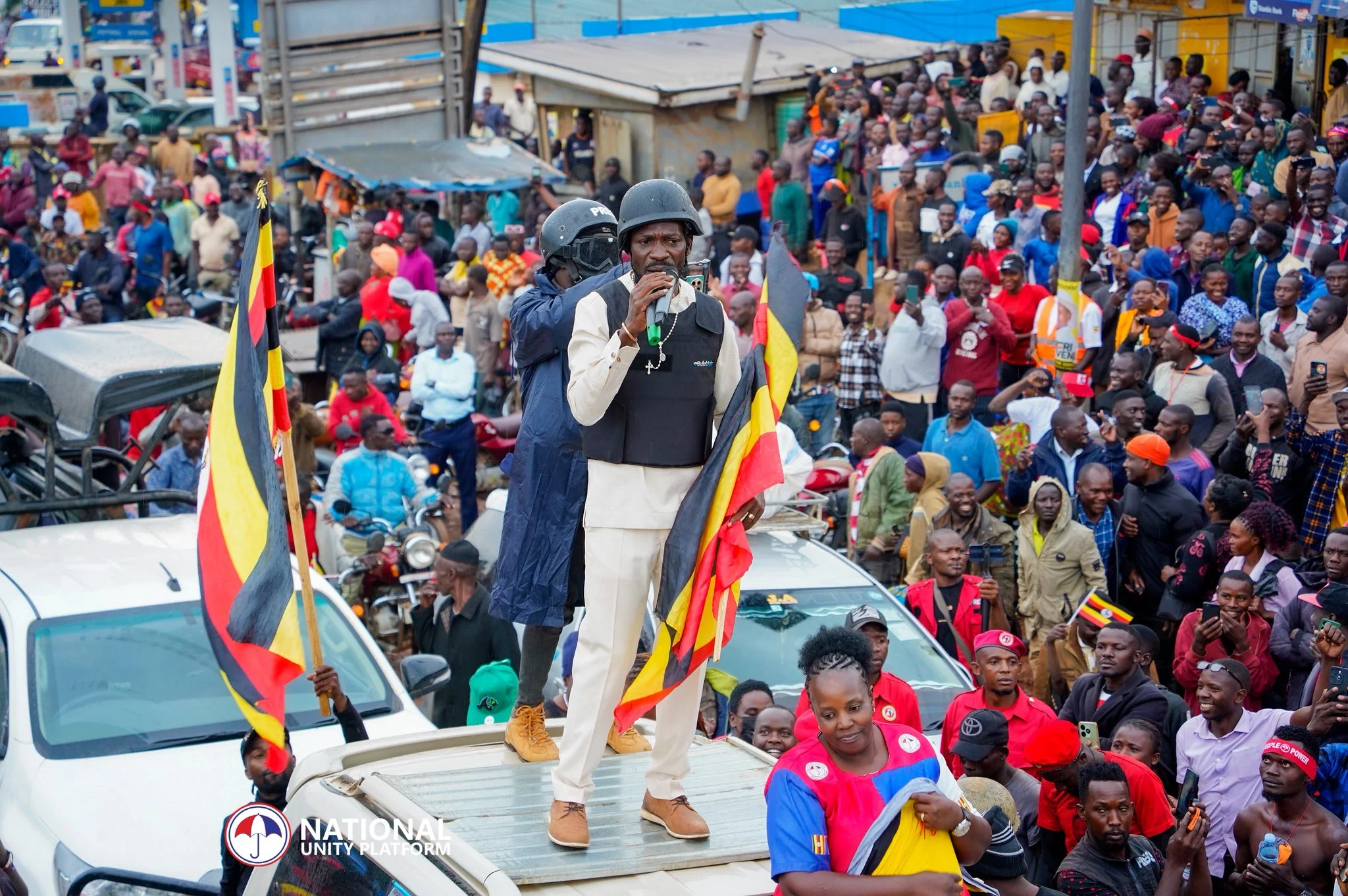
1. Bobi Wine Campaigns in a Helmet and Flak Jacket
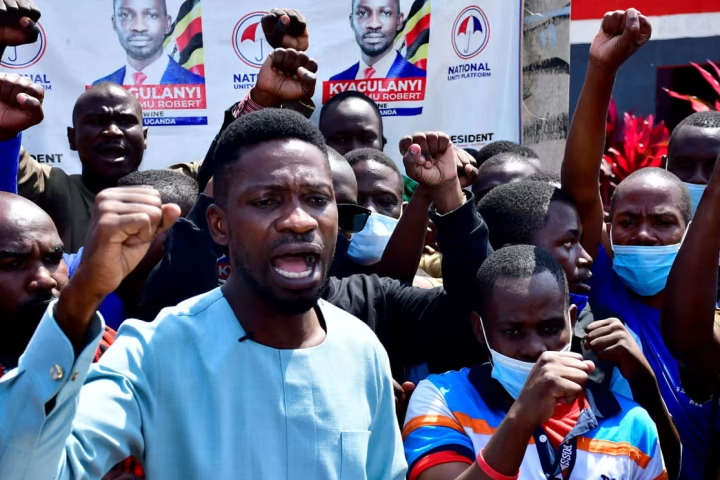
One of the most striking images of the campaign came from opposition leader Bobi Wine, who repeatedly addressed rallies wearing a helmet and flak jacket. The gear became a powerful symbol of the risks faced by opposition figures and underscored allegations of violent repression. For supporters, it embodied resistance; for critics, it highlighted how militarised Ugandan politics has become.
2. Museveni’s Familiar Stability Message
President Yoweri Museveni stuck closely to his long-tested playbook. His campaign framed the election as a choice between continuity and chaos, emphasising security, infrastructure, and economic progress. After nearly four decades in power, Museveni presented himself as the only guarantor of stability in a volatile region.
3. Arrests and Detentions of Opposition Figures
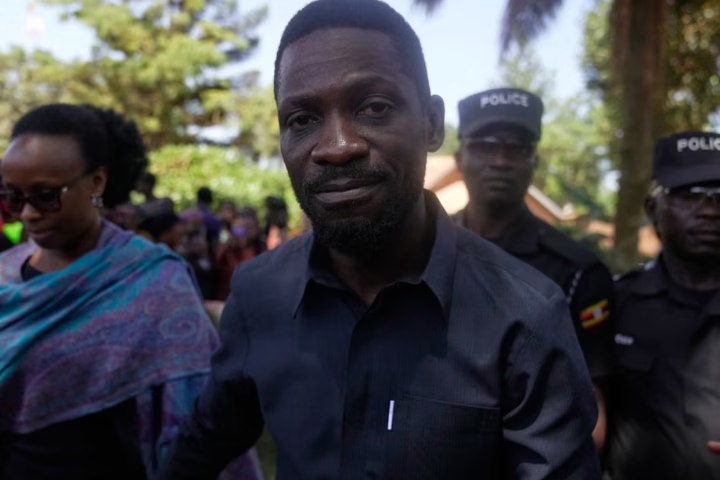
Throughout the campaign, opposition activists and candidates were arrested or detained, often briefly but repeatedly. Rights groups said the pattern created a climate of fear and exhaustion. The National Unity Platform reported hundreds of arrests, reinforcing claims that the campaign was being managed rather than contested.
4. Heavy Security at Rallies
Large deployments of police and military personnel became a constant feature of campaign events, especially opposition rallies. Armoured vehicles, riot police, and surveillance units were widely visible. Authorities said the measures were necessary to prevent violence, while critics argued they were designed to intimidate voters and suppress turnout.
5. Internet Shutdown and Digital Controls
Days before voting, Uganda entered another nationwide internet shutdown. Social media platforms and messaging services were restricted, limiting live reporting and mobilisation. The move, ordered by the Uganda Communications Commission, drew sharp criticism from civil society and the United Nations Human Rights Office, which warned it undermined transparency.
6. Delayed Campaign Momentum for the Opposition
Unlike 2021, when Bobi Wine’s candidacy electrified young voters, this campaign felt more subdued. Analysts noted fatigue among supporters after years of repression, arrests, and internal party challenges. While Wine remained the central opposition figure, the sense of unstoppable momentum seen five years earlier was noticeably weaker.
7. Internal Tensions Within the Opposition
The campaign exposed growing strains within the opposition itself. Leadership disputes, defections, and corruption allegations weakened cohesion inside the NUP. These internal challenges limited the party’s ability to expand beyond its Buganda stronghold and diluted its national messaging.
8. The Quiet Presence of Muhoozi Kainerugaba
Although not a candidate, the shadow of Muhoozi Kainerugaba loomed large. Museveni’s son, now army chief, remained unusually quiet during the campaign, but his rise over the past five years has reshaped succession debates. Many observers saw the election as less about defeating the opposition and more about managing the regime’s internal future.
9. UN Warnings of Repression and Intimidation
Ahead of polling day, the United Nations warned that the election was taking place in an environment of “widespread repression and intimidation”. These statements reinforced international concerns and placed Uganda’s electoral process under global scrutiny, even as the government dismissed the criticism.
10. A Campaign That Felt Pre-Determined
Perhaps the most defining feature of the campaign was the widespread perception that the outcome was already known. With Museveni firmly in control of the state apparatus and opposition space tightly constrained, many Ugandans viewed the election less as a contest and more as a confirmation of continuity.
A Campaign That Revealed More Than It Resolved
Uganda’s 2026 election campaign did not dramatically alter expectations about who would win. Instead, it revealed deeper truths about power, control, and political transition. The imagery of flak jackets, digital blackouts, and overwhelming security spoke volumes about a system managing pressure rather than opening space.
While voters headed to the polls amid familiar uncertainty, the campaign’s defining moments suggested that the most important questions facing Uganda lie beyond this election—centred on succession, generational change, and whether meaningful political reform can occur without upheaval.