Uganda’s presidential election increasingly appears less like a competitive contest and more like a familiar political ritual. As President Yoweri Museveni seeks a seventh term in office, his long-running duel with opposition leader Bobi Wine is once again at the centre of national attention. Yet for many observers, the real uncertainty no longer lies in who will win—but in what comes after Museveni.
At 81, Museveni enters the race as the overwhelming favourite, backed by the state apparatus, entrenched political networks, and a narrative built around stability. Bobi Wine, the most prominent opposition figure of his generation, remains his principal challenger. But compared to the dramatic surge of 2021, this rematch is unfolding in a very different political environment.
A Familiar Contest With a Predictable Outcome
On paper, the 2026 election resembles a rerun of 2021. Museveni, the former guerrilla leader who has ruled Uganda for nearly four decades, faces Bobi Wine, the pop star-turned-politician whose rise electrified young voters and unsettled the ruling establishment five years ago.
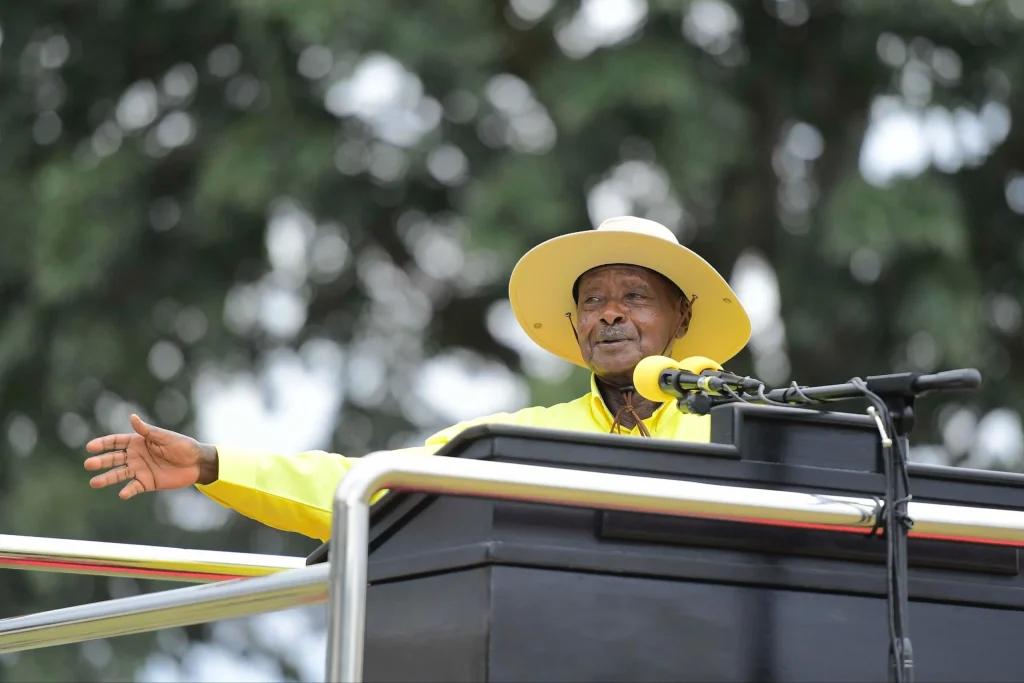
Museveni leads the National Resistance Movement, a political machine deeply embedded in state institutions, local government structures, and the security forces. His campaign message remains largely unchanged: continuity, peace, and economic progress versus the risk of instability.
Five other candidates are on the ballot, but as in previous elections, analysts agree the race effectively narrows to Museveni versus Wine.
Opposition Under Pressure
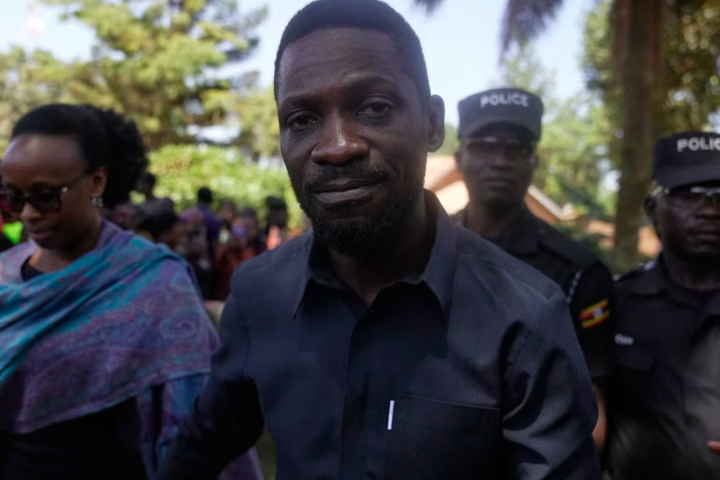
The lack of suspense surrounding the outcome is closely linked to the political climate in which the election is being held. According to the United Nations, hundreds of opposition supporters and activists have been arrested in the months leading up to the vote. Opposition rallies have been disrupted, candidates detained, and campaign activities tightly constrained.
For Museveni, this approach is consistent with past elections. The state’s security and administrative machinery plays a central role—not only in governing, but also in shaping the electoral environment. The president presents these measures as necessary to maintain order and protect economic gains, a message that still resonates with large sections of the population.
Bobi Wine’s Changed Momentum
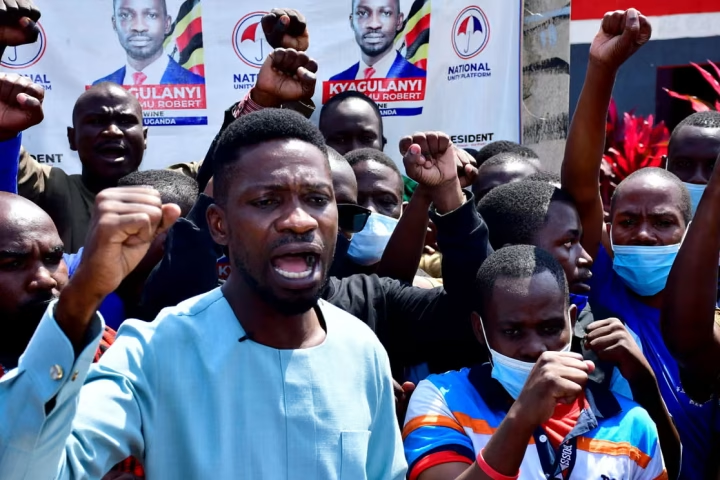
In 2021, Bobi Wine—whose real name is Robert Kyagulanyi—was a political phenomenon. He embodied youth anger, anti-establishment energy, and the promise of generational change. He won more than 35 percent of the vote despite arrests, an internet blackout, and post-election repression.
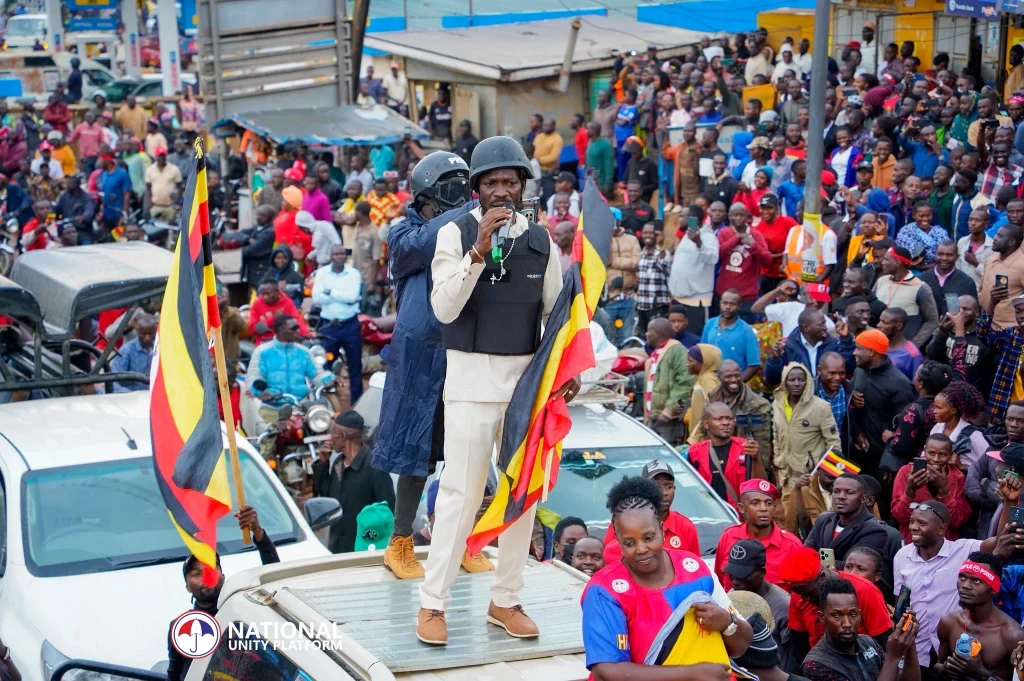
Five years on, the energy around his candidacy has shifted. His party, the National Unity Platform, has become the largest opposition force in parliament, but that institutionalisation has come with costs. Internal divisions, leadership controversies, and difficulties expanding beyond its Buganda heartland have weakened its national reach.
Political analysts note that Wine no longer represents an unknown threat. The state has had years to study, anticipate, and contain his movement.
A Different Political Context From 2021
While the candidates are the same, the broader political context is not. The absence of veteran opposition figure Kizza Besigye has consolidated Wine’s position as the main challenger, but it has also placed the full weight of opposition expectations on his shoulders.
At the same time, the ruling establishment has become more cohesive around Museveni, even as it quietly prepares for a future beyond him. The election, therefore, feels less like a contest over power today and more like a transition marker within the ruling system itself.
The Succession Question Looms Large
Perhaps the most significant shift since 2021 is the growing prominence of Museveni’s son, Muhoozi Kainerugaba. Elevated to the position of army chief and surrounded by an increasingly political inner circle, Muhoozi has emerged as a central figure in succession debates.
Though he has kept a low profile during the campaign, his influence is widely felt. The rise of groups such as the Patriotic League of Uganda and his frequent, sometimes incendiary, public statements have forced the regime to confront questions it long sought to defer: how power will be transferred, and to whom.
For many Ugandans, Museveni’s likely re-election is no longer the main story. The bigger issue is whether Uganda is witnessing the early stages of a dynastic transition or a managed internal succession within the ruling elite.
Stability Versus Change — Again
Museveni has long framed elections as a binary choice between preserving achievements and risking chaos. This message continues to appeal to older voters and rural communities who associate his rule with relative peace after decades of turmoil.
Bobi Wine, meanwhile, continues to speak to a younger, more urban electorate frustrated by unemployment, corruption, and political exclusion. Yet without the element of surprise that defined his earlier run, converting that frustration into decisive electoral momentum has proven difficult.
A Foregone Conclusion, But Not a Final Chapter
As Uganda approaches polling day, few observers expect a dramatic upset. Museveni’s grip on power remains firm, supported by institutions, security forces, and a political system designed to favour continuity.
But while the Museveni–Wine contest may look settled, Uganda’s political future is anything but. The unresolved question of succession—embodied by Muhoozi Kainerugaba’s rise—casts a long shadow over the election and the years ahead.
In that sense, the 2026 vote is less about who wins today and more about how power will be managed tomorrow in a country preparing, slowly and cautiously, for life after Yoweri Museveni.