Uganda’s post-election period has turned deadly after overnight violence in the country’s central region left at least seven people dead, according to police, even as early official results showed President Yoweri Museveni extending his long dominance of national politics. The unrest followed a tense presidential election that appears set to carry Museveni into a fifth decade in power.
The violence underscores the deep political divisions that have shaped Uganda’s latest electoral cycle, which has been closely watched both at home and abroad due to concerns over repression, security force conduct, and the shrinking space for opposition politics.
Museveni Opens a Wide Lead in Partial Results
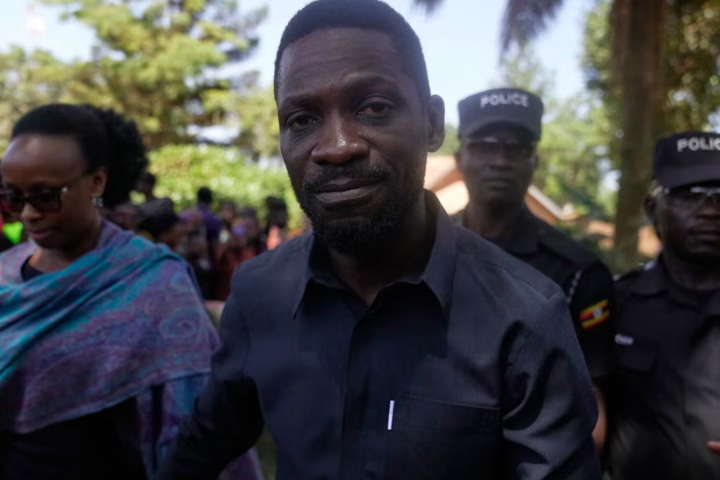
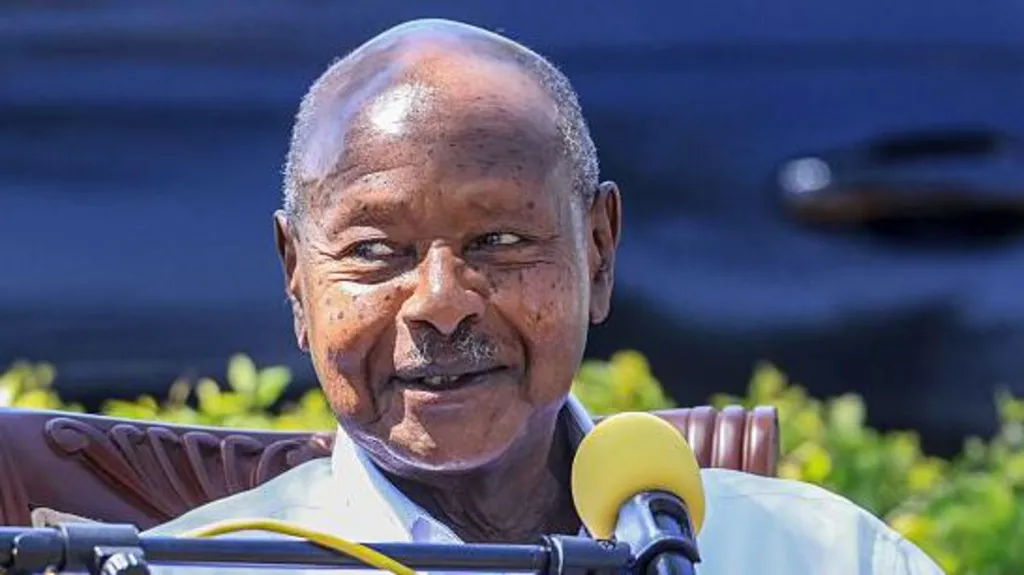
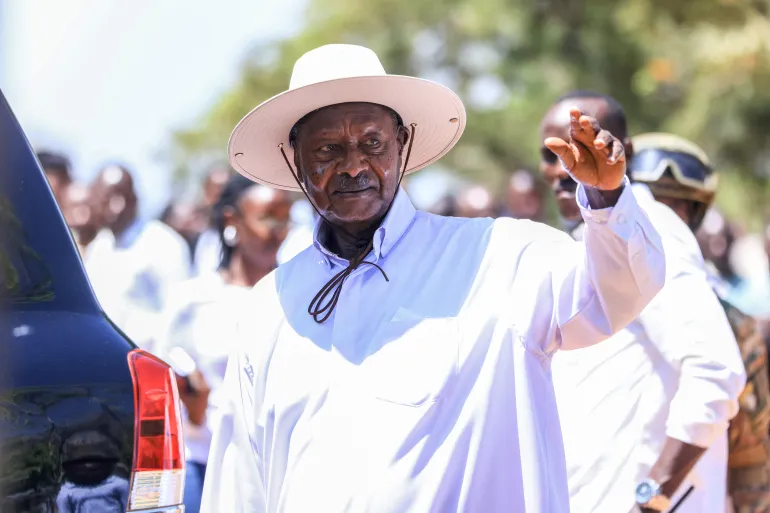
Results released by the Electoral Commission on Friday showed Museveni with more than 75 percent of the vote, based on tallies from about 59 percent of polling stations nationwide. His closest challenger, opposition figure and musician-turned-politician Bobi Wine, trailed with roughly 21 percent, while the remaining votes were split among six other candidates.
Although final results had yet to be announced, the partial figures reinforced expectations among analysts that Museveni would once again prevail, having already won six previous presidential elections since taking power in 1986.
Deadly Overnight Violence in Central Uganda
The calm that followed voting day was shattered overnight by violence in Butambala, a town roughly 55 kilometers southwest of the capital, Kampala. Police confirmed that at least seven people were killed during clashes, though the exact circumstances remain disputed.
Police spokesperson Lydia Tumushabe told reporters that opposition supporters armed with machetes attacked a police station and a vote-tallying center. She said security forces responded in self-defense, adding that 25 people were arrested in connection with the incident.
However, opposition legislator Muwanga Kivumbi, who represents the area, offered a sharply different account. He said the victims were killed inside his residence in the early hours of the morning while supporters waited for results from his parliamentary race. According to Kivumbi, security forces broke into the house and opened fire.
Reuters said it was not immediately able to independently verify either version of events, highlighting the uncertainty surrounding the deadly confrontation.
Campaign Marked by Repression Concerns
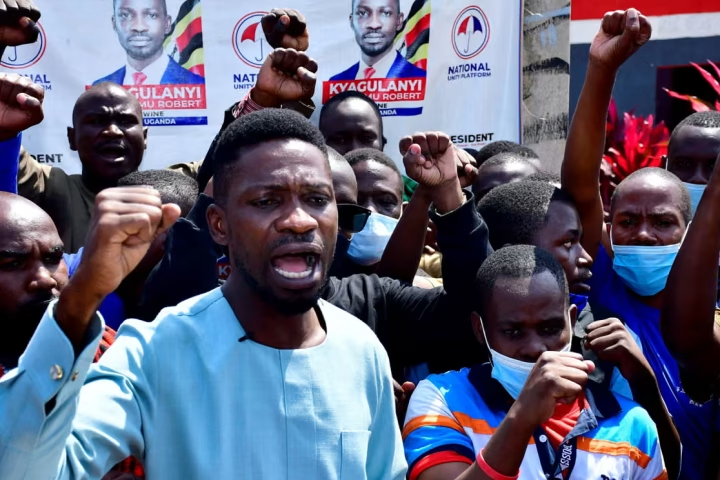
The election followed months of political tension and sporadic violence during the campaign period. Opposition rallies were frequently disrupted, and supporters of Bobi Wine’s National Unity Platform were repeatedly arrested or dispersed by security forces.
The United Nations had warned ahead of the vote that the election environment was characterized by “widespread repression and intimidation,” raising concerns about whether the process could be considered free and fair.
Despite these warnings, election day itself passed relatively peacefully, with no major incidents reported while polling stations were open.
A Critical Test of Museveni’s Grip on Power
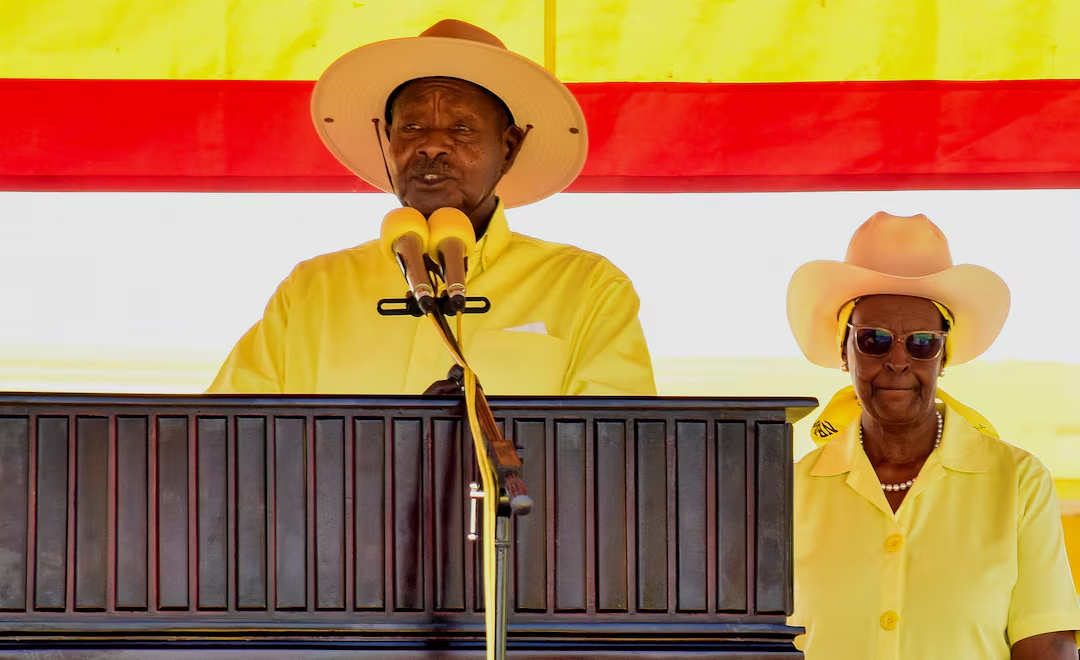
At 81, Museveni framed the election as a choice between stability and uncertainty. He has consistently argued that his leadership guarantees peace, economic development, and national security in a country that experienced decades of upheaval before he took power.
Opposition figures counter that Uganda needs democratic renewal, pointing to high youth unemployment, corruption, and restrictions on political freedoms. Bobi Wine, whose real name is Robert Kyagulanyi, has positioned himself as the voice of a younger generation in a country where most citizens are under 30.
Security, Stability, and the Days Ahead
The violence in Butambala has raised fears of further unrest as the country awaits final election results. While security forces have increased their presence in several districts, authorities insist the situation remains under control.
If confirmed, Museveni’s victory would further consolidate one of the longest-running presidencies in modern African history. He is widely believed to favor his son, army chief Muhoozi Kainerugaba, as a potential successor, a claim he has repeatedly denied but one that continues to fuel political debate.
As Uganda moves toward the final announcement of results, the combination of electoral dominance, contested violence, and unresolved allegations of repression suggests the country may face renewed political tension in the days ahead.