Uganda’s presidential election has descended into a period of heightened tension and uncertainty after overnight clashes left at least seven opposition supporters dead, even as early official results placed President Yoweri Museveni firmly in the lead. The violence, combined with an internet blackout, heavy security deployments, and allegations of repression, has once again raised serious questions about the country’s democratic trajectory.
As vote counting continues, Uganda finds itself confronting a familiar but increasingly volatile post-election moment—one that blends political dominance with deep public mistrust and fear of further unrest.
Museveni Takes a Strong Early Lead
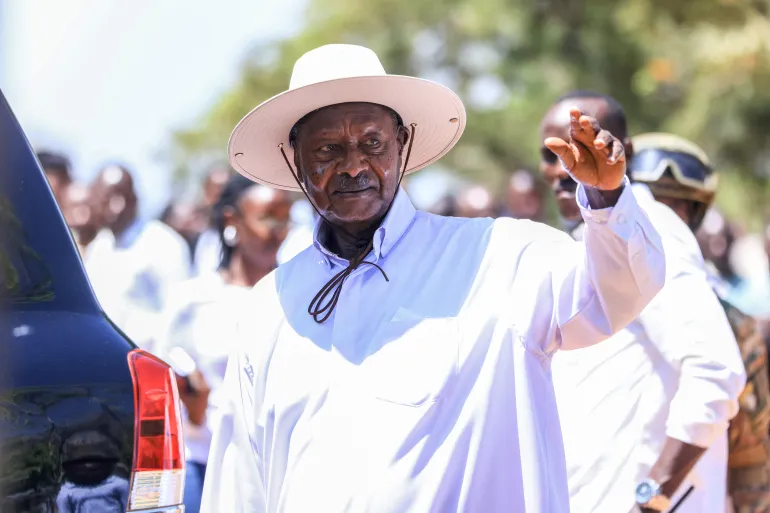
According to figures released by the Electoral Commission on Friday afternoon, Museveni had secured around 75 percent of the vote, based on results from 60 percent of polling stations nationwide. His closest challenger, opposition leader Bobi Wine, was trailing with approximately 21 percent, while the remaining votes were shared among six other candidates.
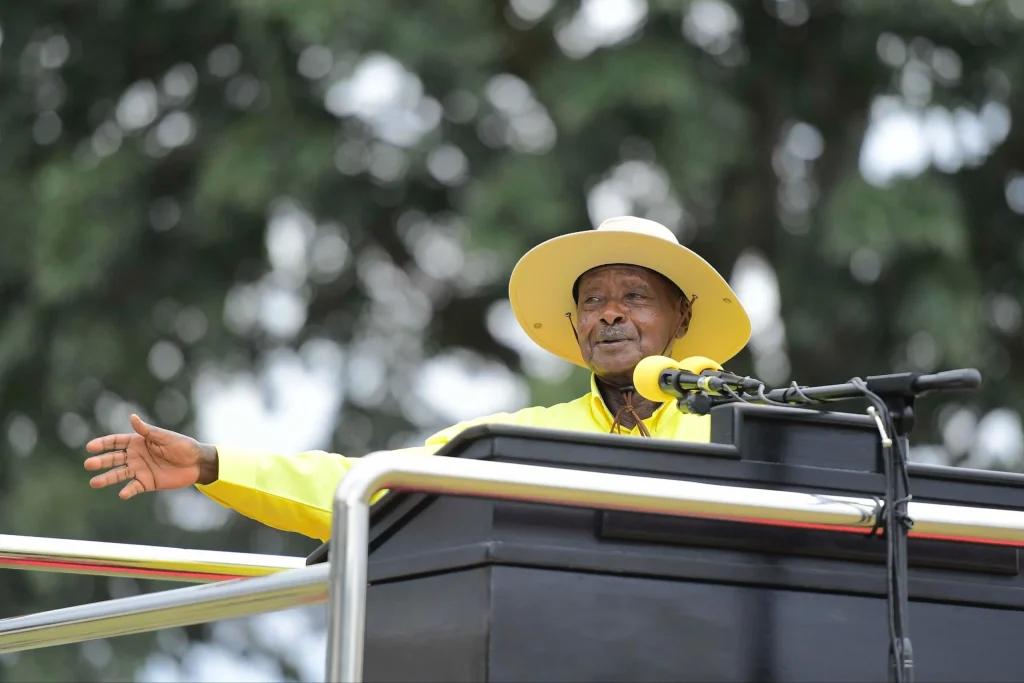
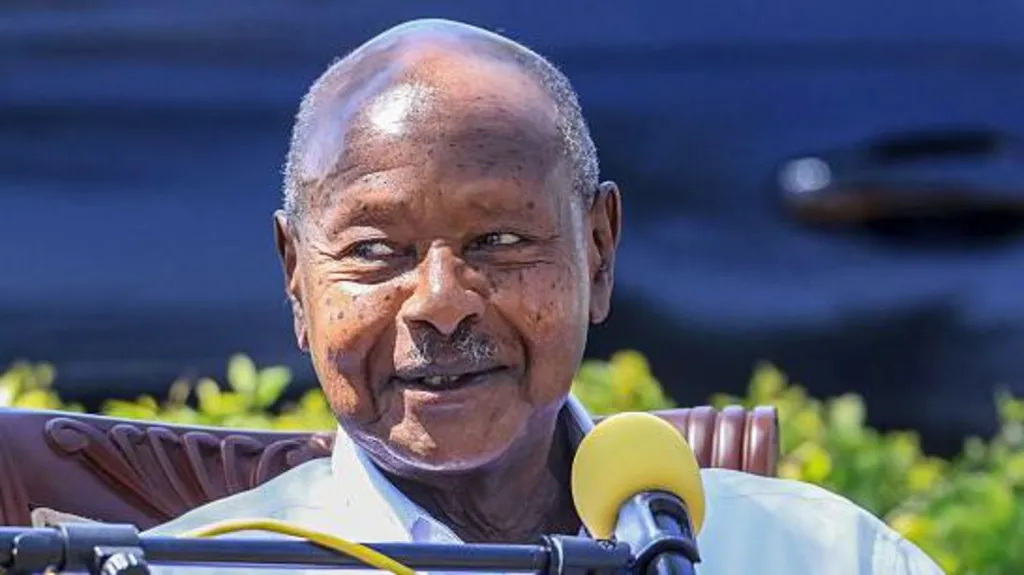
The early results suggest Museveni is on course to secure a seventh consecutive term, extending his rule—already one of the longest in Africa—into a fifth decade. Museveni, now 81, has governed Uganda since 1986 and argues that his continued leadership is essential for stability and economic progress.
Opposition Leader’s Home Surrounded by Security
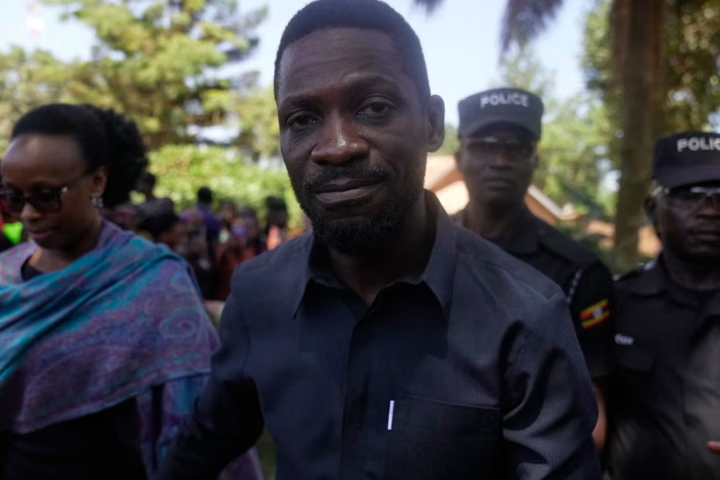
As the vote tally progressed, Bobi Wine’s party, the National Unity Platform, said security forces had surrounded his residence in Kampala’s Magere area, effectively placing him and his wife under house arrest.
The party alleged that armed personnel jumped over the perimeter fence and began erecting tents within the compound. Local journalists reported being blocked from accessing the area, raising concerns over press freedom and transparency during the critical post-election period.
Police spokesperson Kituuma Rusoke told local media that Wine was “a person of interest” and that the security deployment was intended to protect him, not to detain him. Similar restrictions were imposed on Wine following the 2021 election, when he was confined to his home for several days.
Deadly Clashes in Butambala
The most serious violence was reported overnight in Butambala, about 55 kilometres southwest of Kampala. At least seven opposition supporters were killed in clashes involving security forces, though accounts of what happened differ sharply.
Opposition MP Muwanga Kivumbi told international media that soldiers and police fired tear gas and then live ammunition at hundreds of people gathered at his home to follow early election results. He claimed that several people were killed inside his residence.
Human rights activist Agather Atuhaire confirmed this account, saying the victims were opposition supporters.
However, local police spokesperson Lydia Tumushabe rejected those claims, stating that police fired in self-defence after what she described as an attack by “NUP goons” armed with machetes, axes, and incendiary materials. She said the group had targeted a police station and planned to overrun a vote-tallying centre.
Independent verification of the events has not yet been possible, leaving uncertainty over responsibility and the exact circumstances of the deaths.
Internet Blackout Delays Information
The emergence of details about the violence was delayed by a nationwide internet blackout imposed earlier in the week. Uganda’s Communications Commission said the shutdown was necessary to prevent misinformation, fraud, and the incitement of violence.
Critics argue the blackout severely restricted access to information, limited independent reporting, and heightened public anxiety. The United Nations human rights office condemned the move as “deeply worrying,” warning it undermined transparency and accountability.
Electoral Commission chair Simon Byabakama insisted the blackout had not affected vote counting, saying results were transmitted through a secure private system. He said final presidential results were expected within 48 hours.
Campaign Marked by Repression Allegations
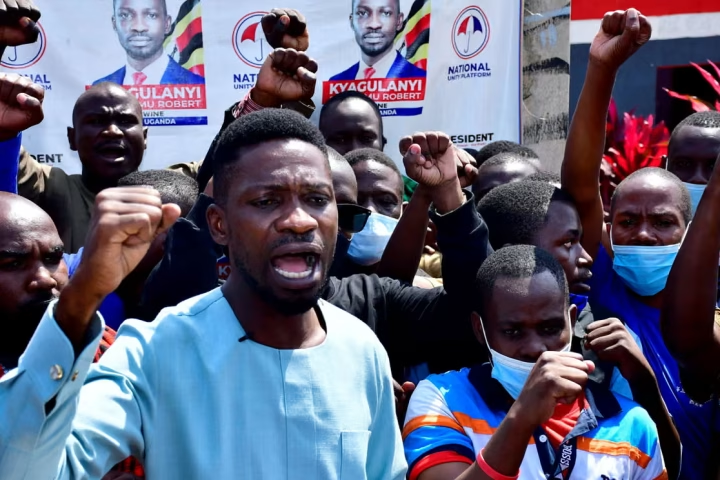
Ugandans voted after a campaign period widely described as tense and often violent. Opposition rallies were frequently disrupted, with security forces accused of assaulting and detaining Wine’s supporters. Authorities denied wrongdoing, accusing opposition groups of disorderly conduct.
Ahead of the election, the UN warned that the vote would be conducted in an environment of “widespread repression and intimidation.” Rights groups said the pattern of arrests, forceful dispersal of rallies, and surveillance of opposition figures raised serious concerns about political freedoms.
Two Visions for Uganda’s Future
The contest between Museveni and Wine reflects a broader generational and political divide. Museveni presents himself as the guarantor of stability in a region prone to conflict, while Wine, a 43-year-old former pop star, appeals to Uganda’s youthful population with promises to fight corruption and deliver sweeping reforms.
With most Ugandans under the age of 30, Wine’s rise has highlighted growing frustration with prolonged one-man rule, even as Museveni continues to command strong institutional and security backing.
Awaiting Final Results
Although Wine had urged supporters to protest if results were manipulated, there were no signs of demonstrations as of Friday morning. Heavy security deployments across Kampala and other urban centres suggest authorities are bracing for possible unrest.
If confirmed, Museveni’s victory would extend his four-decade grip on power and intensify debate over succession, particularly amid speculation that his son, army chief Muhoozi Kainerugaba, could one day take over.
As Uganda awaits the final announcement, the combination of electoral dominance, deadly violence, and unresolved allegations of repression points to a deeply fragile political moment—one that will shape the country’s future long after the ballots are counted.