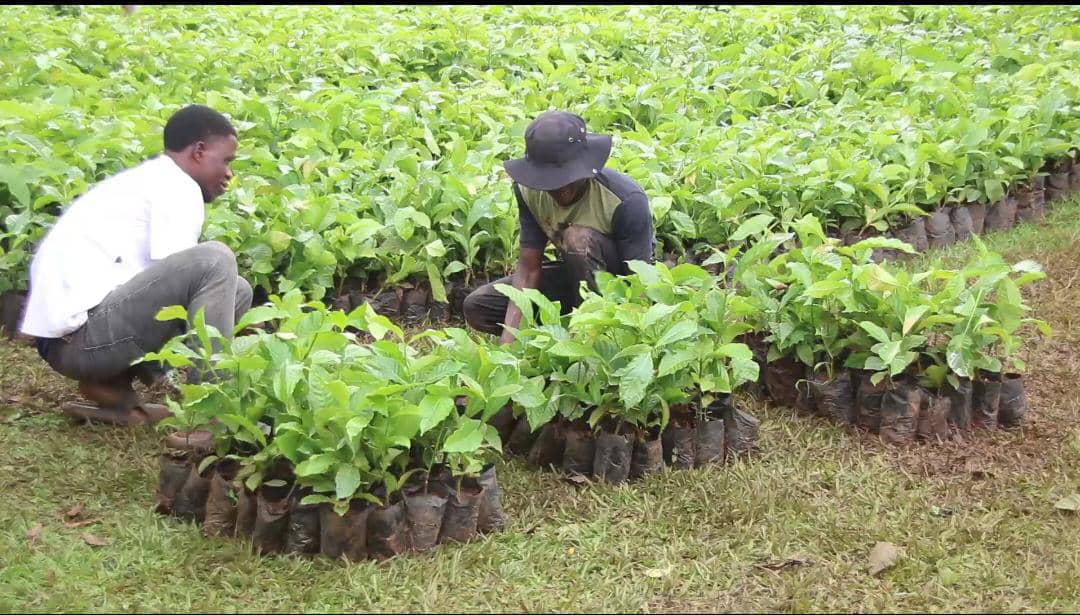
The government has distributed 8,000 modern coffee seedlings to farmers in Masaka District, a move aimed at strengthening coffee production, raising household incomes, and supporting Uganda’s broader poverty eradication agenda. The intervention targets farmers in Kyannamukaaka and Kyesiiga sub-counties and forms part of coordinated efforts by the state and the Buganda Kingdom to promote coffee as a reliable pathway to sustainable livelihoods.
The seedlings were delivered through the office of former Vice President Edward Kiwanuka Ssekandi, with beneficiaries selected from coffee-growing communities that already play a vital role in the greater Masaka sub-region’s agricultural economy. Local leaders and extension workers described the exercise as timely, noting that improved planting materials are essential to boosting yields and improving quality at the farm level.
Aligning Coffee with Poverty Eradication Goals
This distribution aligns with government policy that positions coffee as a cornerstone of rural income generation and export growth. Uganda remains Africa’s leading coffee exporter, and initiatives that expand acreage and improve productivity are central to stabilizing farmer earnings amid price volatility. Within Buganda, the campaign popularly known as Emwanyi Terimba continues to encourage households to invest in coffee farming as a dependable long-term asset.
Masaka District is among the country’s key coffee-producing zones, with thousands of families relying on the crop to meet education costs, healthcare needs, and daily household expenses. By expanding access to improved seedlings, authorities aim to help farmers replace aging trees, increase resilience to disease, and shorten the time to harvest.
Youth Participation and Long-Term Livelihoods
Speaking during the handover at Bulegeya Village in Kyannamukaaka Sub-county, Oscar Mutebi, an aide in Ssekandi’s office, emphasized the government’s focus on youth participation in agriculture. He said the administration of President Yoweri Museveni views coffee farming as a strategic solution to unemployment and rural poverty.
According to Mutebi, young people are being encouraged to take coffee seriously, not as a short-term activity but as a long-term livelihood that can provide stable income over decades. He added that when properly managed, coffee offers returns that can support families, finance education, and stimulate local economies.
Mutebi also called for enhanced government support beyond seedlings, particularly the provision of fertilizers and other inputs that directly influence yields and bean quality. He noted that complementary support would help farmers realize the full potential of the improved planting materials they have received.
Guidance on Proper Use and Management
Officials overseeing the distribution cautioned farmers against selling the seedlings, stressing that the program’s success depends on proper planting and management. Joseph Kizito Kawonawo, who coordinates special duties in Ssekandi’s office, urged beneficiaries to view the seedlings as an investment rather than an opportunity for quick cash.
He reminded farmers that government interventions are designed to open pathways to improved livelihoods and that misuse of the seedlings would undermine both personal and national development goals. Agricultural extension worker John Baptist Matovu reinforced this message, advising farmers to work closely with trained officers to ensure correct spacing, soil preparation, and ongoing crop care.
Matovu warned that poor agronomic practices could lead to losses, even with improved varieties, and encouraged regular monitoring to prevent pests and diseases from spreading across farms.
Farmer Reactions and Sector Challenges
Farmers who received the seedlings welcomed the initiative, describing it as potentially transformative for their communities. Several beneficiaries said the support would allow them to expand their gardens, increase output, and stabilize incomes over time. Many expressed optimism that improved yields would translate into better living standards and stronger local economies.
At the same time, farmers raised persistent concerns affecting the coffee sector. Coffee wilt disease remains a significant threat, while high fertilizer prices and the circulation of counterfeit agro-inputs continue to undermine productivity. Farmers called for stricter regulation of input suppliers and sustained technical support to help them manage these challenges effectively.
Sustaining Coffee as an Economic Pillar
As government and cultural institutions continue to promote coffee as a pillar of Uganda’s economy, stakeholders in Masaka are appealing for long-term, coordinated support. They argue that sustained extension services, affordable inputs, and robust disease control measures are essential to keeping coffee farming profitable and resilient.
The distribution of 8,000 seedlings marks a practical step toward these goals. If paired with consistent technical assistance and market support, local leaders believe the initiative can help secure livelihoods, empower youth, and reinforce coffee’s role in driving inclusive rural growth across the Masaka sub-region.