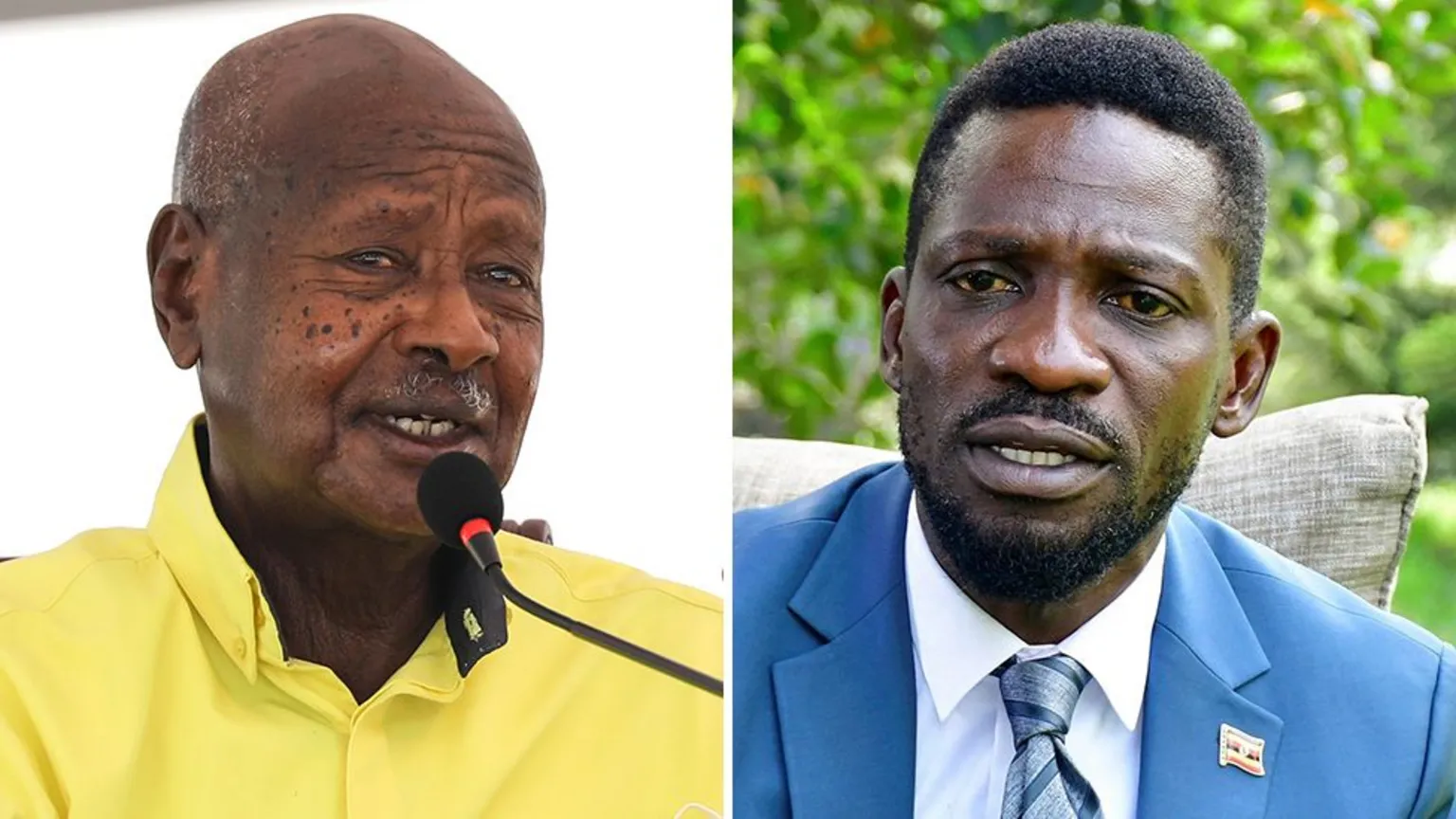
As Uganda prepares for its 2026 presidential election, citizens are faced with a critical choice: either continue the rule of President Yoweri Museveni, who has been in power for 40 years, or opt for Bobi Wine, a pop star-turned-politician who promises a revolution in governance and sweeping reforms. The upcoming vote, set for January 15, 2026, marks the second time these two will face off at the ballot box, with Museveni seeking his seventh successive term in office.
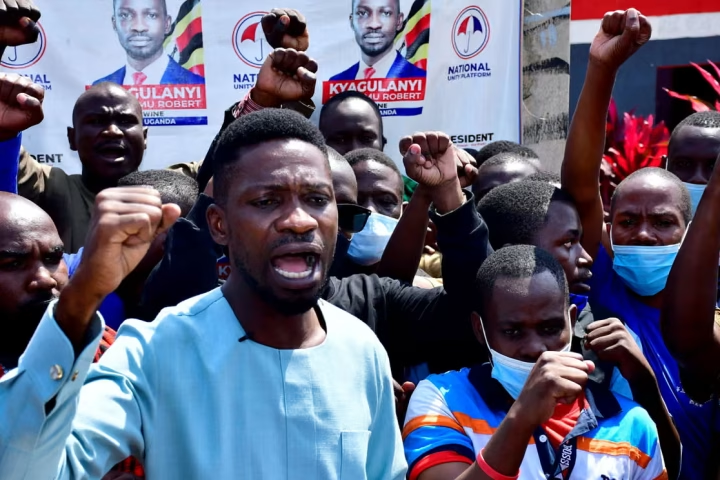
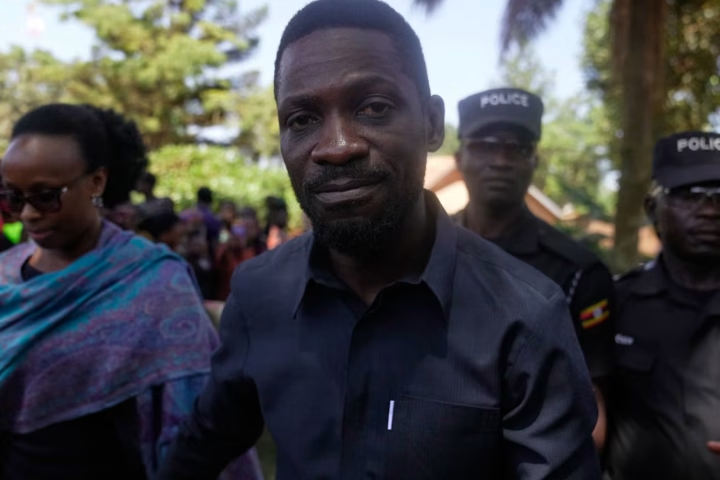
At 43 years old, Bobi Wine, whose real name is Robert Kyagulanyi, has become a symbol of resistance against Museveni’s long-standing rule. Known for his charisma and his appeal to Uganda’s youth, Bobi Wine’s platform is centered on economic reforms, human rights, and democratic change—promises that resonate with many Ugandans, particularly in a country where over 70% of the population is under 30 and unemployment remains high.
Candidates: The Veteran Leader vs. The Political Outsider
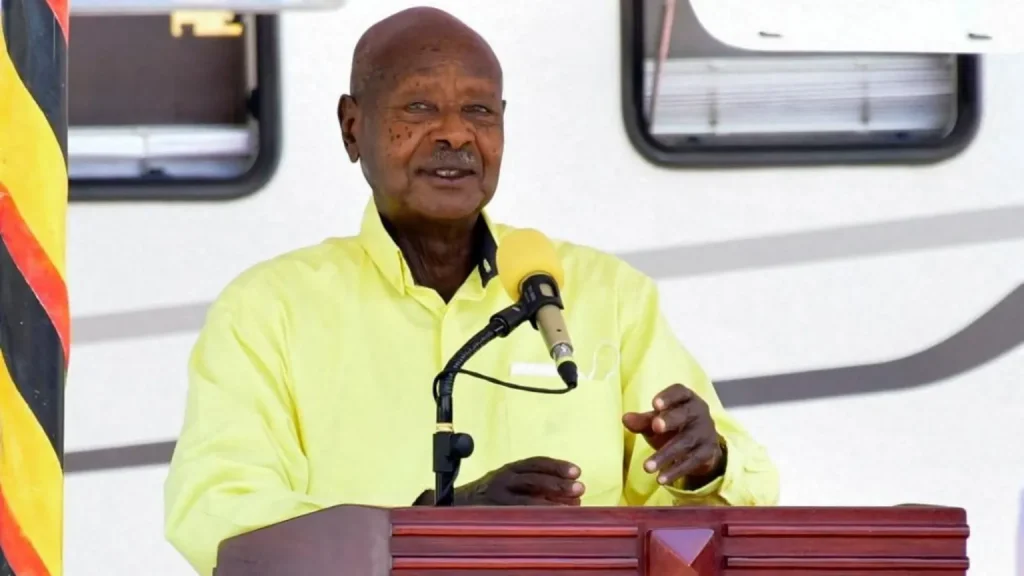
Yoweri Museveni first assumed power in 1986 after a guerrilla insurgency, pledging to restore democracy in a country that had been ravaged by dictatorship and civil war. For decades, Museveni was celebrated as a leader who brought stability to Uganda after the brutal rule of Idi Amin. However, his presidency has increasingly been marked by accusations of corruption, human rights abuses, and political repression. Museveni, now 81 years old, has faced growing criticism for his extended rule and for eroding democratic institutions, especially after constitutional amendments that allowed him to remain in power by removing age and term limits.
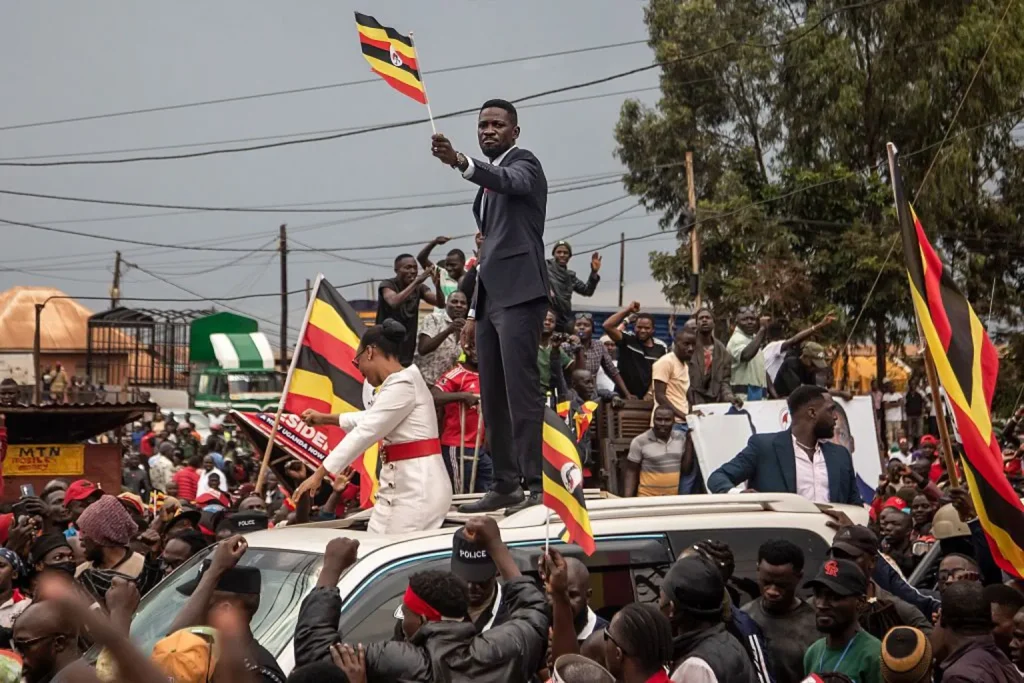
On the other side of the aisle stands Bobi Wine, a former musician and actor who made a remarkable leap into politics. After his election as a Member of Parliament in 2017, Bobi Wine became the leader of the National Unity Platform (NUP), which emerged from his People Power Movement. His political appeal lies in his youthful energy, his focus on issues like youth unemployment, poverty, and corruption, and his personal background as a representative of the urban poor. Despite being arrested and facing constant harassment from security forces, Bobi Wine has continued to rise as a leading political challenger to Museveni’s government.
Key Issues in the 2026 Election: Economic Struggles and the Youth Vote
With Uganda’s economy struggling to keep pace with its rapidly growing population, economic issues are central to the election campaign. Youth unemployment has reached alarming levels, and the lack of job opportunities for young Ugandans has fueled much of the frustration among voters. Bobi Wine’s message resonates strongly with the youth, who see him as a representative of their struggles and aspirations. His emphasis on wealth redistribution, creating jobs, and fighting corruption aligns with the frustrations felt by the younger generation who are disillusioned by the lack of economic opportunities.
In contrast, Museveni’s government has often been criticized for favoring the elite and for its failure to tackle the structural challenges facing the economy. While Uganda has seen economic growth in recent years, the benefits have not trickled down to the majority of the population. Museveni’s critics argue that his policies have perpetuated inequality and failed to provide basic services to the broader population.
Political Repression: The Struggle for Free and Fair Elections
The 2026 election is being held under a cloud of political repression. Since Bobi Wine first entered politics, he has faced frequent harassment by government forces. In 2021, his presidential campaign was marked by violent crackdowns, including tear gas, beatings, and shootings of his supporters by security forces. Opposition rallies have been disrupted, and activists have been detained on trumped-up charges.
Amnesty International has described the situation as a “brutal campaign of repression”, noting that the Museveni government has used force to suppress the opposition, including targeting journalists and human rights defenders. While the government insists that these actions are necessary for maintaining law and order, critics argue that they are part of a broader strategy to intimidate and silence dissenting voices.
As election day nears, concerns about the fairness of the vote remain. Bobi Wine has repeatedly warned that vote-rigging could occur, and he has urged his supporters to stay at polling stations and protect their ballots. There are also fears that the government may attempt to shut down the internet during the election, a tactic it has used in the past to prevent citizens from verifying election results. Despite these challenges, Bobi Wine remains committed to fighting for democratic reforms and pushing back against Museveni’s authoritarian rule.
The Military and Its Influence on Uganda’s Politics
One of the key challenges Bobi Wine faces is the military’s strong influence in Uganda’s politics. Museveni’s government has long relied on the military to maintain its grip on power, and the army plays a crucial role in securing the regime. Bobi Wine, who has no military background, faces significant hurdles in gaining the trust of the military establishment. In Uganda’s history, the military has been pivotal in either overthrowing governments or consolidating power, and Museveni has used this influence to maintain his rule.
Despite this, Bobi Wine is confident that Uganda is ready for civilian leadership. He believes that the country’s constitution demands that the military be subordinate to civilian authority, and he argues that the time has come for Uganda to have a democratically elected leader who represents the people, not the military.
When Will We Know the Results?
The results of the 2026 presidential election are expected to be announced within 48 hours of the polls closing on January 15, 2026. If no candidate wins more than 50% of the vote, there will be a run-off within 30 days. Given the long-standing popularity of Museveni, it is expected that he will continue to secure significant support, but Bobi Wine’s strong showing in the 2021 election shows that Uganda’s political landscape is shifting.
A Pivotal Moment for Uganda’s Democracy
As Ugandans head to the polls, they face a historic decision. Will they continue with Museveni, whose leadership has dominated the country for 40 years, or will they choose Bobi Wine, a political outsider who represents change and the aspirations of a new generation?
The outcome of the 2026 election will not only determine who leads Uganda for the next five years but will also set the course for the country’s democratic future. If Bobi Wine emerges victorious, it could mark a turning point for Uganda—a step toward more inclusive governance and a more equitable future for all Ugandans.
This election, however, is not just about two candidates; it is about the future of Uganda, the right to choose a leader, and the fight for democracy. Whether Bobi Wine succeeds or not, his rise in politics marks a shift in the conversation about Uganda’s governance, and his efforts to push for change will continue to inspire future generations.