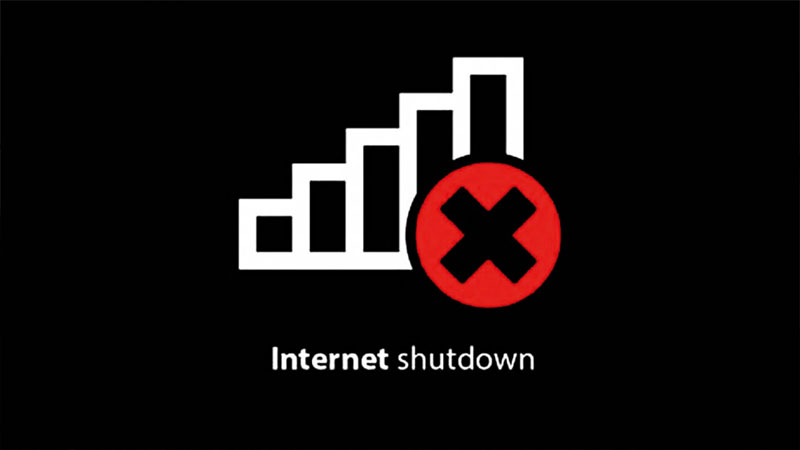
The screens go dark. Mobile data vanishes. In Uganda—where mobile money, health alerts, and election updates flow through our phones—few scenarios are more disruptive than a prolonged internet blackout Uganda.
This isn’t fearmongering; it’s realism. Whether from cyberattack, power failure, or infrastructure damage, internet outages will happen. The question is: Will you be ready?
Uganda’s Digital Vulnerability
Ugandans rely heavily on the internet—not just for social media, but for survival. Mobile money (like MTN MoMo and Airtel Money) powers daily transactions. Health facilities use digital records. Farmers check market prices online. During elections, citizens depend on real-time updates.
But when connectivity fails, so does access to emergency services, banking, and critical information. Even first responders may struggle if radio backups are weak or overwhelmed.
Remember the 2021 internet shutdown during elections? Or regional outages during storms? These are warnings—not anomalies.
Your First Steps When the Net Goes Down
Act fast. Time is your most precious resource.
- Set up an offline command center at home. Keep flashlights, batteries, a hand-crank radio, printed contacts, and cash in one safe spot.
- Verify the outage scope. Try multiple networks—MTN, Airtel, Uganda Telecom. If all fail, it’s likely nationwide.
- Use alternative communication. In rural areas, community leaders, church networks, or boda boda riders often relay news faster than digital channels. In urban centers, consider low-cost two-way radios (walkie-talkies) for family coordination.
Build Local Resilience—Before Crisis Hits
Uganda’s strength lies in community. Strengthen ties now:
- Know your Local Council (LC) leaders—they coordinate emergency responses.
- Connect with neighborhood watch groups or SACCOs; they often share resources during crises.
- Learn basic ham radio or join a local amateur radio club. Though underused, radio remains vital when cell towers fall.
Go Offline—But Stay Prepared
Don’t wait for an outage to act. Do this now:
- Store key documents offline: Save digital copies of national IDs, land titles, insurance papers, and medical records on a low-power device like an old Kindle or USB drive. These use minimal battery and can last weeks on one charge.
- Keep cash at home: When MTN MoMo fails, shillings in hand keep food on the table.
- Laminate paper records: Weather, dust, and spills won’t destroy laminated copies of emergency contacts or health info.
Your Uganda-Specific Offline Library
When Google vanishes, books become lifelines. Build a practical offline library:
- Health: Where There Is No Doctor (by Hesperian)—a trusted guide for rural Uganda. Include malaria treatment, wound care, and maternal health.
- Agriculture: Uganda’s Crop Production Guides from NAADS or MAAIF—cover maize, beans, coffee, and banana farming for your district.
- Water & Sanitation: How to purify water using solar disinfection (SODIS)—a method proven effective in Ugandan villages.
- Local plants: Edible and Poisonous Plants of East Africa—critical for foraging during food shortages.
- Repair manuals: Basic guides for fixing borehole pumps, motorcycle engines (boda bodas), or solar panels—common lifelines in off-grid areas.
Store these in a dry, termite-proof container. Prioritize waterproof or laminated editions.
Power, Payment, and Practical Wisdom
- Power: Invest in a small solar charger. Even 5 watts can keep a basic phone alive for emergency calls.
- Money: Keep small-denomination Ugandan shillings (UGX 1,000–10,000 notes). Vendors won’t break a 50,000 note during chaos.
- Knowledge: Teach children how to send a message via runner or use a whistle code. In remote areas, low-tech often saves lives.
Final Thought
In Uganda, resilience isn’t theoretical—it’s woven into our history. From droughts to conflicts, communities have endured by relying on each other and practical knowledge.
An internet blackout Uganda may disrupt the digital layer—but it won’t break us if we prepare.
Start today. Print one document. Save one guide. Talk to your LC1 chair. Because when the screens go dark, your offline readiness will light the way.