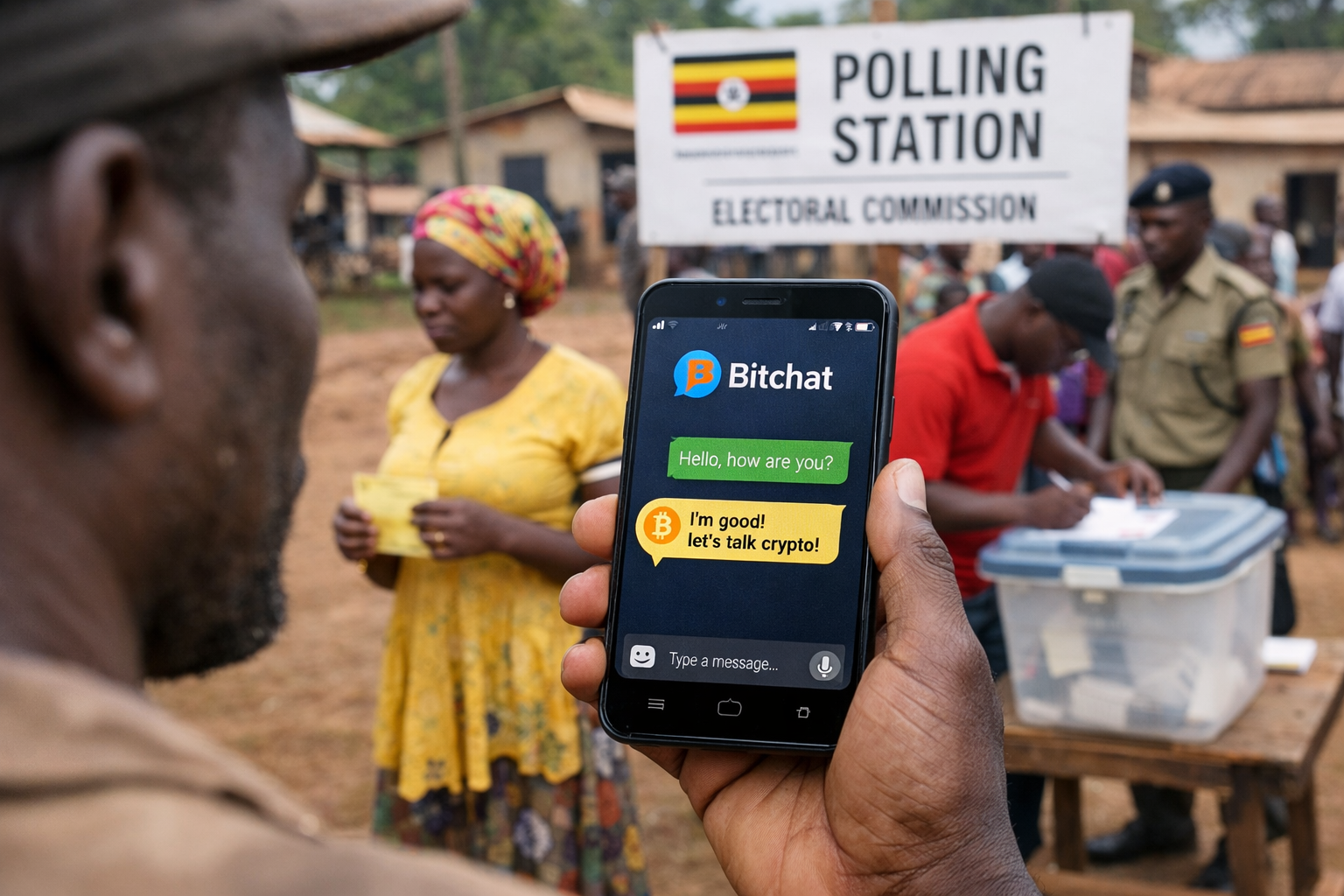
In Uganda, Iran, and Cuba, where governments have resorted to internet shutdowns during political unrest, a simple app called Bitchat has emerged as a crucial tool for communication. Developed by Jack Dorsey, co-founder of Twitter, Bitchat operates without mobile data or Wi-Fi, making it a game-changer during times of internet blackouts. The app uses Bluetooth mesh technology, allowing users to send messages to nearby phones, which relay the information to others until it reaches its destination.
In Uganda, Bitchat has rapidly gained traction as a tool for communication, especially in the lead-up to the 2026 elections when the government restricted internet access to prevent citizen organization. In Iran, Bitchat downloads surged after the government imposed internet blackouts during protests. The same pattern of internet censorship has been observed in Cuba, where citizens have faced restrictions on communication, further emphasizing the need for decentralized, offline solutions like Bitchat.
How Bitchat Works: The Bluetooth Mesh Network
Bitchat’s unique approach to communication is based on Bluetooth technology, which allows users to connect and send messages through a mesh network of nearby devices. This means that even without internet access, individuals in close proximity can exchange text and voice messages. The app doesn’t require a login, phone numbers, or internet access, making it less susceptible to government interference and censorship.
This technology is particularly useful in environments like street protests, neighborhood meetings, or rural areas where the infrastructure may not support a continuous internet connection. It offers a glimmer of hope for people in countries like Uganda, Iran, and Cuba, where political crackdowns often target communication networks to control information.
Limitations of Bitchat: Physical Distance and Usage in Cuba
While Bitchat offers an innovative solution for offline communication, its effectiveness is limited by physical distance. The Bluetooth signal range typically spans between 10 and 100 meters, meaning the app is most effective in densely populated areas or during events where many users are concentrated in a small space. In less populated areas, such as the outskirts of Havana or Santiago de Cuba, the app’s usefulness is limited unless a network of devices is deliberately set up to relay messages.
Additionally, while Bitchat is valuable during complete internet outages, it doesn’t replace more bandwidth-intensive activities like live streaming or sharing large media files, which are essential during protests or for documenting human rights abuses. A reporter in Havana stated, “Being able to send messages without internet is better than nothing, but to document abuses or record interviews, we still rely on traditional internet connections.”
The Value of Bitchat in Countries with Fragile Infrastructure
In Cuba, where internet access is expensive, unreliable, and often intentionally blocked by the government, Bitchat could provide a lifeline for maintaining basic communication among close-knit groups. However, many Cubans still rely heavily on social media platforms like Facebook and Instagram, making it difficult for them to explore alternative communication tools like Bitchat. Nonetheless, for activists, independent journalists, and communities seeking a less controlled path, Bitchat offers a viable and cost-effective option for communication during blackouts.
Bitchat as a Complementary Tool for Digital Resilience
While Bitchat may not replace global networks or the full range of internet-dependent activities, its true value lies in its ability to fill the communication gap when traditional internet services fail. During times of crisis, such as protests, natural disasters, or government-imposed internet restrictions, Bitchat offers a resilient alternative for staying connected, sharing information, and offering reassurance in the face of uncertainty.
For a mother in Cuba trying to check on her son in Marianao when the internet goes down across Havana, being able to send an offline text via Bitchat could mean the difference between a night of anxiety and one of peace. In countries like Uganda, Iran, and Cuba, where digital infrastructure is fragile and subject to political interference, Bitchat could rewrite the possibilities for communication in the digital age.