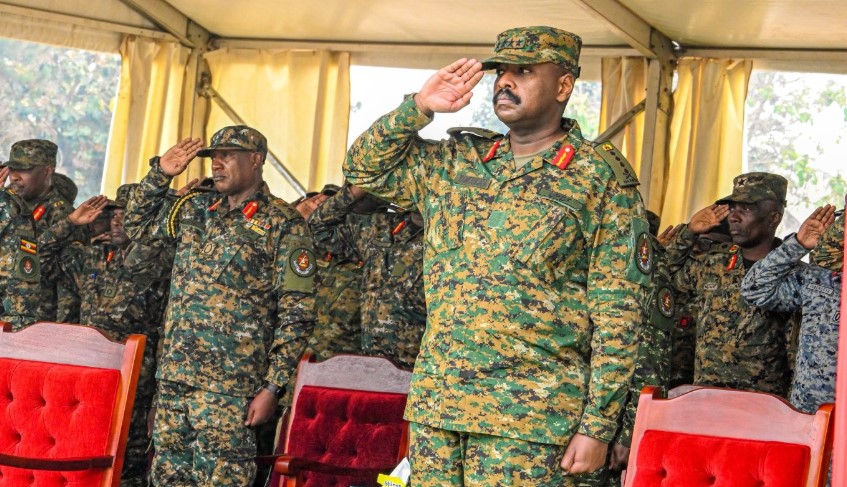
Uganda’s military chief, Muhoozi Kainerugaba, has publicly denied allegations that soldiers assaulted Barbara Kyagulanyi, the wife of opposition leader Bobi Wine, during a raid on their home. The allegations have sparked intense political debate and heightened tensions in the country, particularly after the controversial results of Uganda’s January 15 presidential election, in which long-time President Yoweri Museveni, Kainerugaba’s father, claimed victory.
The opposition has strongly rejected the election results, accusing the government of electoral fraud. The situation has led to growing fears of violent crackdowns, with reports of security forces targeting opposition leaders and their families. Barbara Kyagulanyi’s alleged assault, described as a traumatic and violent encounter, has drawn widespread condemnation, both locally and internationally.
This incident comes as Muhoozi Kainerugaba has increasingly called for Bobi Wine’s surrender, further escalating the already tense political climate in Uganda. With Wine still in hiding, and the military surrounding his home, the confrontation between the government and the opposition has reached a boiling point.
The Alleged Assault: Barbara Kyagulanyi’s Account
The alleged assault on Barbara Kyagulanyi took place after a night raid at the Kyagulanyi residence, an event that opposition leader Bobi Wine later described in vivid detail. According to Wine, a group of military officers surrounded the house, broke in, and held Barbara at gunpoint, demanding to know her husband’s whereabouts.
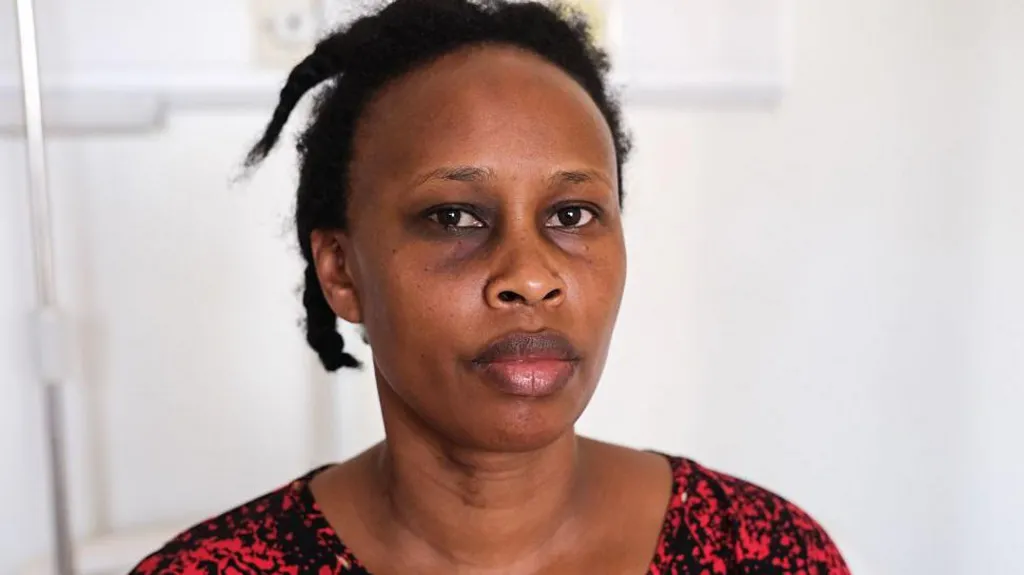
Barbara Kyagulanyi, speaking from her hospital bed, recounted the traumatic ordeal. She explained that dozens of men, some dressed in military uniforms, stormed into the house, harassing and physically assaulting her. “One of the officers hit me on the face and tore my lip. They dragged me around, and another officer choked me while I was lifted in the air by the waistband of my trousers,” she recalled. The assault left her shaken, both physically and emotionally. “I passed out from the ordeal,” she said.
Barbara Kyagulanyi also described how her blouse was forcibly removed, leaving her partially exposed. Afterward, it was returned to her, but the physical and psychological scars remained. She was later taken to the hospital for treatment, suffering both physical injuries and the emotional trauma of the assault.
Bobi Wine shared his wife’s experience on social media, condemning the actions of the military and reiterating that his wife’s assault was part of a broader pattern of violence against opposition supporters. He expressed deep concern for the safety of his family and thanked the public for keeping him safe, despite the military’s continued pursuit.
Muhoozi Kainerugaba’s Denial and Response
In response to the allegations, Muhoozi Kainerugaba, who is also Uganda’s military chief, took to social media to deny that the military had assaulted Barbara Kyagulanyi. “My soldiers did not beat up Barbie [Bobi Wine’s] wife,” he wrote on X (formerly Twitter). Kainerugaba insisted that the military does not assault women, adding that the military’s focus was solely on finding his “cowardly” opposition leader, Bobi Wine, rather than engaging with his wife.
“We are looking for her cowardly husband, not her,” Kainerugaba continued in his post, dismissing the claims as exaggerated. His statement, which quickly garnered attention, sparked even more controversy, particularly given the serious nature of the accusations and the context of increasing political violence in Uganda.
Kainerugaba’s denial and the tone of his remarks have been criticized by human rights organizations and members of the opposition, who view it as dismissive of the suffering experienced by Barbara Kyagulanyi. His words have only fueled growing fears of a harsh government response to political dissent.
Worsening Political Tensions in Uganda
The controversy surrounding Barbara Kyagulanyi’s alleged assault comes against the backdrop of Uganda’s tense political climate following the contested January 15 presidential election. Museveni, who has ruled Uganda for nearly four decades, was declared the winner with 71.65% of the vote, a result strongly contested by the opposition. Bobi Wine, who came second with 24.72%, rejected the outcome, describing it as fraudulent and manipulated.
In the aftermath of the election, the opposition has faced increasing pressure from the government, with reports of widespread arrests, detentions, and alleged acts of torture. The Uganda Law Society condemned the actions of the security forces, calling them violations of basic human rights and a clear attempt to suppress dissent. “No one should be subjected to violence by security forces under the pretext of national security,” the Law Society said in a statement.
In addition to the assault on Barbara Kyagulanyi, Muhoozi Kainerugaba’s threats against Bobi Wine have further intensified the climate of fear. Kainerugaba publicly stated that security forces had killed 30 opposition members, calling them “terrorists,” and that 2,000 others had been detained since the election. These statements have added to concerns that the Ugandan government is resorting to violent tactics to quell opposition movements and maintain control.
Bobi Wine’s Defiant Stand
Despite the increasing threats from the government, Bobi Wine has maintained a defiant stance. From his undisclosed location, he continues to reject the election results, calling for justice and the end of what he describes as an authoritarian regime. “My wife is still recovering from the trauma of the overnight raid and assault. My home is still surrounded by the military,” Bobi Wine posted on social media, expressing both frustration and determination to continue his fight for democracy.
Bobi Wine also issued a bold message directed at Muhoozi Kainerugaba, challenging him to confront him directly. “A rebel without a gun, hiding in plain sight, and yet you can’t find me because I’m concealed by the people. Catch me if you can!” Wine declared, signaling that he remains committed to his cause despite the constant threats to his life.
Human Rights Concerns and International Reactions
The assault on Barbara Kyagulanyi has drawn widespread condemnation from human rights organizations, both within Uganda and internationally. Reports of military violence against opposition figures and their families are becoming more frequent, leading to concerns about the future of political freedom and human rights in Uganda.
International observers have expressed alarm over the military’s actions and the government’s increasingly repressive measures against opposition leaders. The continued crackdown on political dissent threatens to undermine Uganda’s democracy and its international reputation. These developments have led to calls for greater scrutiny and pressure from the international community to hold the Ugandan government accountable for its actions.
A Nation at a Crossroads
The assault on Barbara Kyagulanyi, Muhoozi Kainerugaba’s denial, and the ongoing political tension in Uganda paint a troubling picture for the future of the country’s political landscape. With the opposition leader still in hiding and his supporters facing violent retribution, Uganda finds itself at a crossroads.
The repressive tactics employed by the government, including military raids, detentions, and threats against opposition figures, are rapidly eroding the democratic space in Uganda. As the situation unfolds, it remains to be seen whether international pressure will force the government to ease its grip on power or if Uganda will continue on its path toward deeper authoritarianism.
The political unrest in Uganda is a stark reminder of the fragile nature of democracy in Africa, where the fight for political freedoms is often met with violent resistance. For now, Bobi Wine’s defiant stance continues, as he remains a symbol of resistance against an entrenched political regime. The eyes of the world are on Uganda as it navigates this turbulent period in its history.
RELATED ARTICLES TO READ:Uganda’s Muhoozi Kainerugaba Apologizes for Controversial U.S.Tweets.