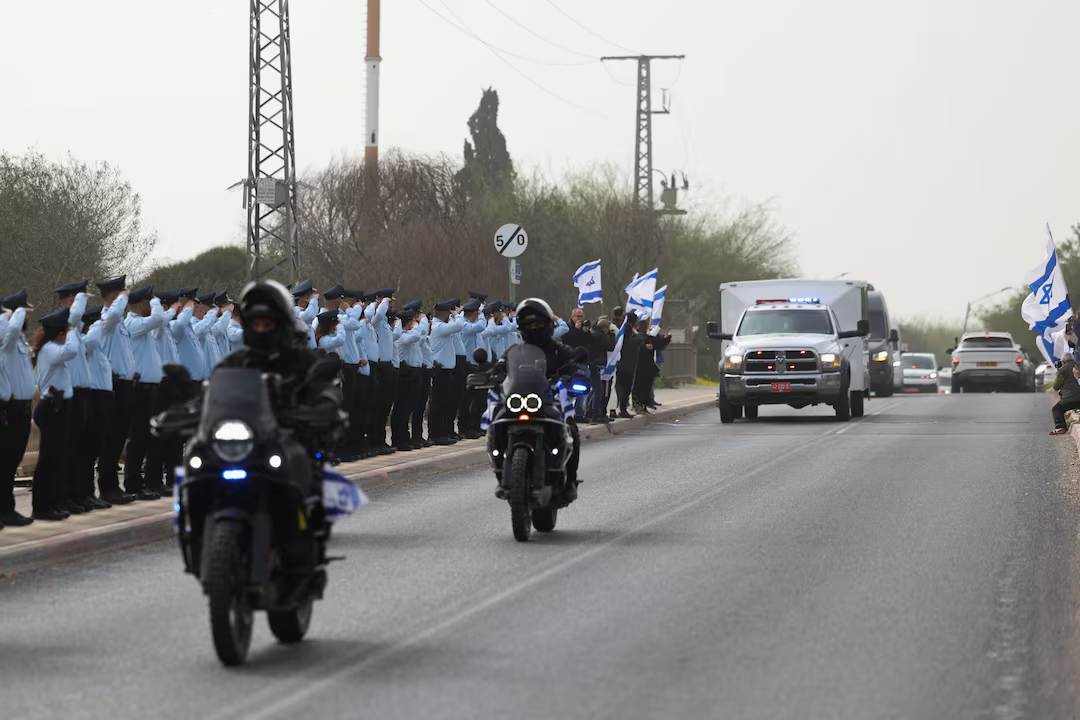
Israel prepares to bid farewell to the last hostage retrieved from the Gaza Strip, marking a somber yet crucial moment in the country’s ongoing journey of healing. Ran Gvili, an off-duty police officer who was killed while defending his country during the October 7, 2023 Hamas attack, will be laid to rest in a deeply emotional funeral. Gvili’s death and the subsequent recovery of his remains represent the final chapter of a traumatic period that has left lasting scars on the Israeli people.
A Heroic End Amidst Tragedy
Ran Gvili was not just a victim of the October 7 attack; he was a hero who made the ultimate sacrifice in the fight against Hamas militants who had infiltrated southern Israel. During the brutal assault, which claimed the lives of over 1,200 Israelis, Gvili fought valiantly to protect his homeland. However, after he was killed in the line of duty, the Islamic Jihad militant group seized his body and took it back to Gaza, where he remained in captivity for months.
Gvili’s abduction was one of approximately 250 such cases during the horrific Hamas attack. The attack, described as one of the bloodiest in the history of Israel, also triggered the war in Gaza, a conflict that has resulted in the deaths of over 71,000 Palestinians, according to Palestinian health authorities.
Gvili’s return marked the conclusion of a long and painful wait for his family and the nation. His remains were among the last to be recovered, following months of negotiations and ceasefires brokered by international powers, including former U.S. President Donald Trump. Under the terms of an agreement in October 2023, Hamas and other militant groups had agreed to release the remaining hostages, whether alive or dead, in exchange for the release of Palestinian prisoners. The tragic reality of Gvili’s death in captivity underscores the immense cost of the conflict.
The Funeral: A National Moment of Reflection
On the morning of January 28, 2026, Gvili’s funeral will take place in his hometown of Meitar, located in southern Israel. His body will be transported in a procession from Camp Shura, a facility where Israeli authorities have been identifying victims from the October 2023 attack, to the cemetery in Meitar for burial. This final journey will be a powerful symbol of closure for the Gvili family and the broader Israeli public.
The funeral service will be attended by Israeli Prime Minister Benjamin Netanyahu and President Isaac Herzog, both of whom are expected to deliver eulogies in honor of Gvili’s sacrifice. The funeral, which is scheduled to begin at 10:30 a.m. local time (0830 GMT), will bring together families, friends, and fellow citizens to pay tribute to the man who lost his life defending his country.
The event is not only a personal farewell to one of the final victims of the October 7 attack but also a collective moment for the nation to reflect on the horrors it has endured. For many Israelis, Gvili’s burial represents a step toward national healing, helping the country turn the page on one of the most traumatic chapters in its modern history.
The Aftermath of the October Attack
The October 7 Hamas attack was more than just a military assault—it was a direct blow to the Israeli psyche, the bloodiest killing of Jews since the Holocaust. The attack, which targeted civilians, left the country in a state of shock, grief, and anger. The psychological and emotional toll of the assault has been profound, with countless families mourning the loss of loved ones, and an entire nation grappling with the scale of the devastation.
The Israeli government, under intense pressure from both domestic and international communities, responded swiftly with military action, resulting in the current war in Gaza. This war, which continues to have devastating consequences, has brought further suffering to both Israelis and Palestinians. While the military offensive aims to dismantle the militant groups responsible for the attack, it has also contributed to a humanitarian crisis, with tens of thousands of casualties on both sides.
Gvili’s death, along with those of countless others, underscores the deep divisions and the tragic reality of the conflict. His funeral will be a poignant reminder of the cost of violence and the human toll of political strife.
A Glimmer of Hope Amid the Pain: Trump’s Peace Plan
Gvili’s funeral marks the completion of one critical phase of former U.S. President Donald Trump’s peace plan, which sought to end the war by securing the release of hostages. With the return of the last captive, the focus is now shifting to the second stage of the plan, which includes the reopening of Gaza’s Rafah border with Egypt. This step, aimed at improving the flow of goods and humanitarian aid into Gaza, is seen as a key move toward de-escalating the conflict and providing some relief to the Palestinian people.
However, many remain skeptical about the long-term prospects for peace. While the release of hostages and the reopening of borders may offer a glimmer of hope, the underlying political issues that have fueled the conflict for decades remain unresolved. The road to lasting peace in the region will undoubtedly be a long and difficult one, requiring sustained efforts from both sides and from the international community.
National Healing and the Road Ahead
The burial of Ran Gvili, the last of the hostages to be returned, will serve as a symbolic milestone in Israel’s journey toward healing. For many, his funeral will represent not only the end of a painful chapter but also a sign of resilience and strength in the face of adversity.
While the scars of the October 7 attack will remain with Israel for years to come, the country is taking important steps toward recovery, both emotionally and politically. Gvili’s sacrifice and the broader loss of life have underscored the need for a broader, long-term peace strategy that addresses both Israeli and Palestinian concerns.
As the nation mourns, the hope is that this painful moment will lead to greater understanding, dialogue, and, eventually, peace—though the path ahead is uncertain, the memory of those lost will continue to shape the future of the region.