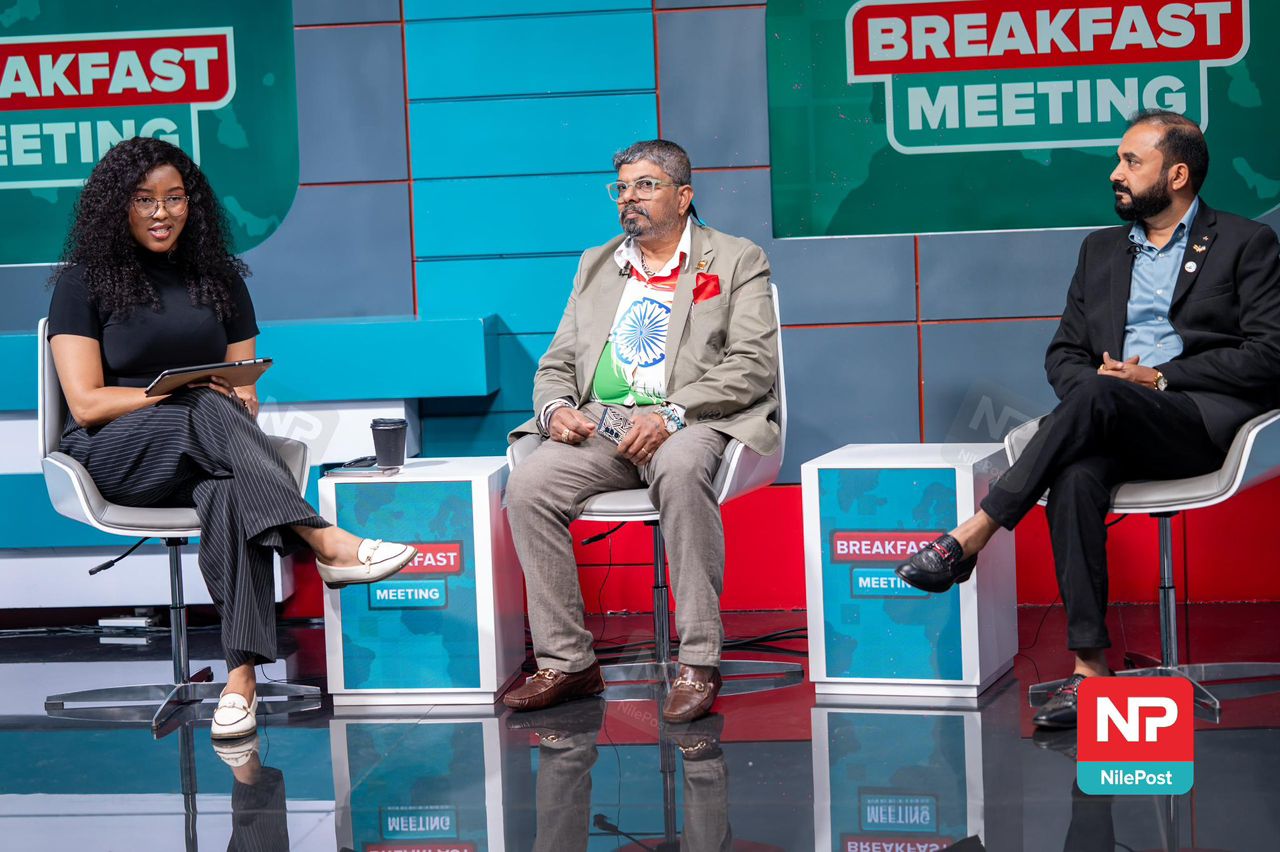
Leaders from Uganda’s Indian community have once again highlighted the critical role they play in the country’s economic and social progress, praising the nation’s stable, pro-investment climate. This praise was voiced during a special session at the NBS Breakfast Meeting held on Friday, January 23, 2026. Speakers, including key figures from the Indian Association Uganda, emphasized how their community’s commitment to Uganda’s growth has remained strong over the decades. From job creation and revenue generation to contributions to social development, the Indian community’s impact on Uganda continues to be immense.
Longstanding Commitment to Uganda’s Prosperity
At the core of the discussion was Paresh Mehta, the Acting Chairman of the Indian Association Uganda. He proudly spoke of the Indian community’s long-standing commitment to Uganda, stressing their unwavering focus on supporting the nation’s growth. Mehta acknowledged that Uganda’s peaceful political environment and stable policies have played a significant role in enabling the community’s ongoing contribution to the nation’s development.
“Our culture teaches us that the world is one family, and wherever we go, we contribute to the growth of that country,” Mehta said. His words reflected the community’s values of shared global responsibility, which guide them in their efforts to positively influence Uganda’s economy and society.
Mehta further praised the ruling National Resistance Movement (NRM) government for its foresight in creating a stable, investor-friendly environment. He pointed out that peace and policy predictability have been essential for long-term investment success. “Uganda has been the most conducive country for investment, providing us with peace, stability, and strong returns on investment,” he added.
Economic Contributions Beyond Size
Despite the fact that people of Indian origin make up less than one percent of Uganda’s total population, their economic contributions are staggering. According to Uganda Revenue Authority (URA) statistics, the Indian community accounts for approximately 65% of the country’s total revenue. This percentage, Mehta emphasized, is a testament to their significant role in Uganda’s economic landscape.
“The numbers speak for themselves. Our community’s contribution to Uganda’s revenue generation is monumental, and we take immense pride in supporting the nation’s economy in such a tangible way,” Mehta explained. This staggering figure highlights how much the Indian community has integrated into Uganda’s economy, particularly in sectors such as trade, industry, manufacturing, and services.
Indian Influence Extends Beyond Business
Tharun Patnaik, the founder of Freedom Factory, also spoke about the multifaceted role the Indian community plays in Uganda. According to Patnaik, their contributions extend far beyond the business sector, with a significant focus on social development and public service.
“Indians have not only been active in building businesses but have also played an integral role in building schools and hospitals across Uganda, from Kampala to rural areas,” Patnaik said. “Our community has been active in driving the development of critical infrastructure, job creation, and industrialization. We are deeply committed to the social responsibility of making a positive impact on the lives of the people of Uganda.”
Patnaik’s comments highlight the Indian community’s involvement in a range of developmental activities, such as enhancing education, improving healthcare infrastructure, and supporting the wider social fabric of Uganda. Their contributions across these diverse areas reflect a dedication to long-term societal improvement in Uganda, not just economic prosperity.
The History and Resilience of the Indian-Ugandan Community
Uganda is currently home to approximately 50,000 people of Indian origin, a number that has drastically decreased from the peak population in the mid-20th century. The migration of Indians to Uganda began during the British colonial period, when India and Uganda were both under British rule. During this time, many Indians arrived in Uganda as indentured laborers or low-wage workers, contributing to the construction of infrastructure, particularly railways.
As the Indian community settled in Uganda, they shifted from laborers to traders and entrepreneurs, eventually becoming key figures in Uganda’s economic development. However, their presence in the country faced a significant disruption in 1972 when Ugandan dictator Idi Amin ordered the expulsion of all South Asians, giving them just 90 days to leave the country. The expulsion led to the displacement of tens of thousands of Indians, with many fleeing to the United Kingdom, Canada, and other countries.
Following Amin’s ouster and the subsequent political stabilization of Uganda, the Indian community began to rebuild its businesses and contribute once again to the country’s growth. Despite the challenges faced during the 1970s, the resilience of the Indian community has allowed them to reclaim their position as key stakeholders in Uganda’s economic and social development.
Global Influence of Indian-Ugandan Heritage
The influence of the Indian-Ugandan community stretches beyond Uganda’s borders, with several prominent figures tracing their roots to this unique heritage. Notable individuals of Indian-Ugandan descent include New York City Mayor Zohran Mamdani, British actress Naomi Scott, Canadian actor Avan Jogia, and British pop singer Charli XCX. These figures, who have achieved success on the global stage, serve as a testament to the resilience and lasting impact of the Indian-Ugandan community.
Their success stories are reflective of the strength and determination of the community, which continues to inspire the next generation of young Ugandans with Indian heritage. These individuals embody the global reach and influence of the Indian-Ugandan diaspora and serve as role models for future leaders in Uganda and beyond.
The Continued Role of the Indian Community in Uganda’s Growth
The Indian community remains committed to supporting Uganda’s economic development. Their contributions, which span across multiple sectors including business, social development, and public service, continue to have a significant and lasting impact. As Uganda moves forward, the continued partnership between the Indian community and the Ugandan government will be crucial in ensuring sustainable development, job creation, and national prosperity.
With a strong foundation of mutual respect and shared values, the Indian community in Uganda looks set to remain an integral part of the country’s economic, cultural, and social landscape. The future of Uganda and its relationship with the Indian diaspora is bright, with both communities working together for the continued growth and prosperity of the nation.