
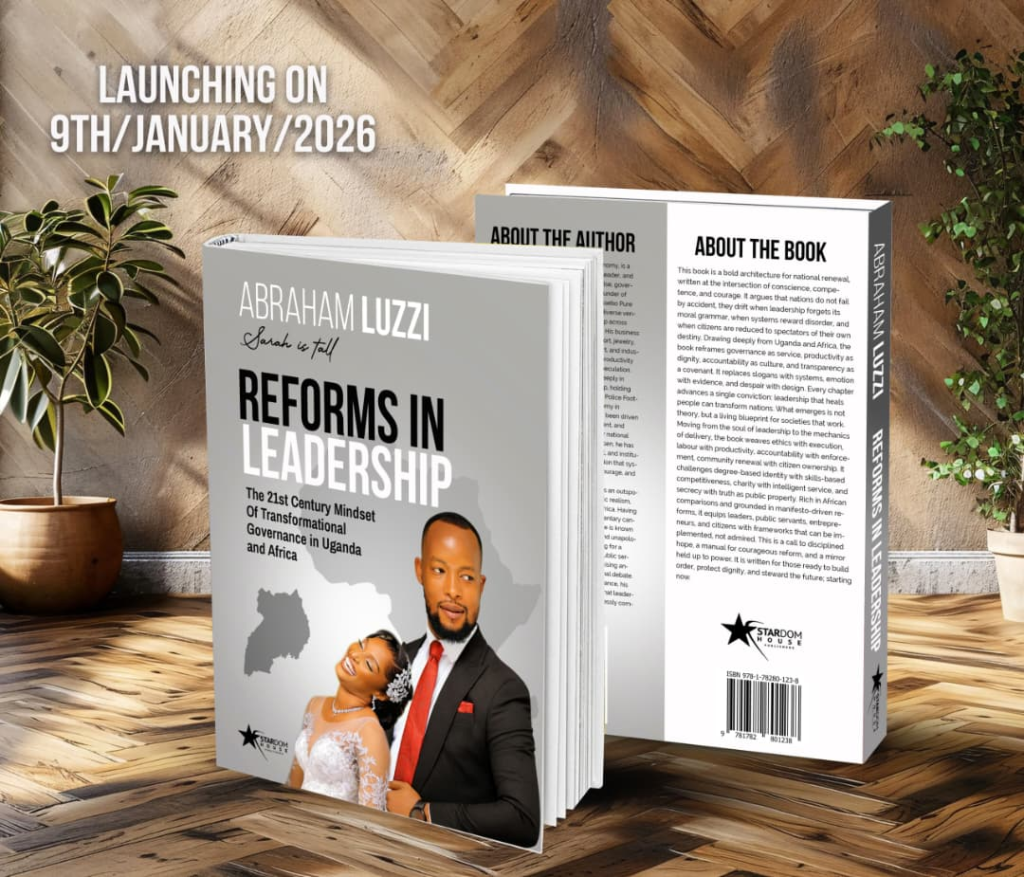
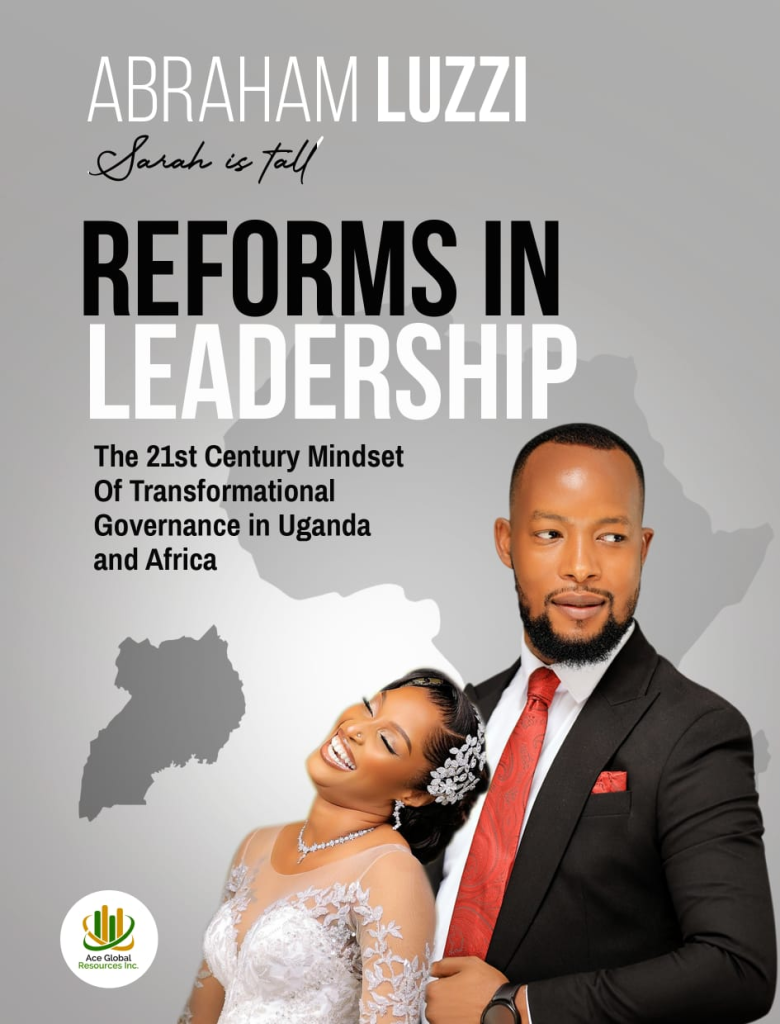
As public trust in traditional institutions wanes and leadership is increasingly associated with control rather than service, a new conversation is taking shape. The question that should be asked is: What is leadership actually for? Abraham Luzzi, in his thought-provoking book Reforms in Leadership, answers this question by challenging the status quo and advocating for a leadership model rooted in healing, accountability, and service.

Luzzi’s book, although written by a political aspirant in the run-up to the 2026 Kampala Central elections, goes beyond politics. It offers a comprehensive framework for understanding governance, one that moves away from personal power struggles and towards building societies that work for all. The book provides readers with a roadmap to reimagine leadership—focusing not on rhetoric or promises but on practical systems and real-world application.
The Core Philosophy: Leadership Designed to Heal, Not Dominate
At the heart of Reforms in Leadership is a powerful yet simple idea: leadership is meant to heal and restore, not to dominate or control. Luzzi argues that societies decline when leadership loses its moral compass and when systems fail to reward order, discipline, and integrity. Instead of accepting that decline is inevitable, he stresses that renewal is possible—through well-designed systems that prioritize competence, accountability, and service to the people.
Luzzi’s philosophy calls for a new kind of leadership—one that focuses on lifting up communities, restoring dignity, and creating opportunities for all. By making leadership a tool for healing, Luzzi believes that nations can overcome their challenges and achieve lasting transformation.
Reforms that Drive Change: From Values to Outcomes
Reforms in Leadership takes a bold step forward by connecting values with real-world outcomes. While many governance discussions remain stuck in theoretical debates, Luzzi provides a clear path forward. He emphasizes that leadership should not just be about making promises or giving speeches, but about executing practical solutions that restore trust and improve lives.
Each chapter of the book builds on a core conviction: leadership that heals can transform a nation. The focus is on execution—on turning values such as accountability, transparency, and integrity into tangible, measurable results. Luzzi’s framework offers a pragmatic approach, focusing on systems that can be implemented to restore people’s trust in their leaders and institutions.
Disrupting Traditional Leadership Models: From Credentials to Competence
One of the key challenges Luzzi addresses in Reforms in Leadership is the overemphasis on credentials as the defining feature of leadership. Rather than focusing on academic qualifications or political connections, Luzzi advocates for skills-based leadership. He suggests that true leadership should be grounded in competence, not in titles or degrees. This shift could be transformative, allowing societies to elevate leaders based on their ability to deliver real results, not just their status.
In this vein, Luzzi also challenges the idea that charity should be the primary vehicle for social change. Instead, he calls for intelligent service—solutions that empower communities and create sustainable development, rather than relying on short-term handouts.
A Global Vision Rooted in African Experience
Although Reforms in Leadership is deeply informed by African experiences and challenges, Luzzi’s vision is global. He recognizes that the problems of leadership, accountability, and governance are not unique to Africa but are shared by societies worldwide. By framing the book in global terms, Luzzi ensures that the principles he advocates for can be applied universally, offering practical solutions for all communities in need of transformative leadership.
Luzzi’s approach is pragmatic and evidence-based, focusing on real comparisons and lived experiences rather than ideological abstractions. This gives the book a grounded, practical feel, making it a useful resource not just for aspiring leaders but for anyone looking to understand the mechanics of effective governance.
Leadership for All: A Call to Action for Public Servants, Citizens, and Entrepreneurs
Reforms in Leadership is not a book solely for politicians or government officials. Luzzi’s message is for anyone in a position of leadership—whether you are a public servant, an entrepreneur, or a community organizer. He believes that sustainable reform can only occur when leaders from all sectors take responsibility for their actions and commit to building systems that reward competence, integrity, and service to the public.
The book challenges all individuals to rethink their role in the leadership ecosystem and to become active participants in driving societal change. It emphasizes that leadership is not just about those in power but about the collective responsibility of everyone to uphold values of justice, accountability, and transparency.
Where to Get Reforms in Leadership
Reforms in Leadership is available in both eBook and physical formats. The eBook edition can be purchased on platforms like Amazon, and physical copies are available for international shipping. For those in Kenya and the surrounding region, pre-orders for autographed copies are available, reflecting the growing demand for ideas that prioritize long-term stability and good governance over short-term political gains.
This book is more than just a read—it is a call to action. Luzzi’s insights offer a practical framework for creating systems that work, making it an essential guide for anyone serious about transforming leadership into a tool for societal healing and empowerment.
Conclusion: A Blueprint for Leadership that Heals
In a world where leadership is often linked to control and power, Reforms in Leadership offers a refreshing and vital alternative. Abraham Luzzi’s vision for leadership as a service to the people, rooted in accountability and execution, is a framework for lasting change. His book challenges the traditional narratives of leadership, offering practical solutions that prioritize competence, integrity, and the well-being of citizens.
Luzzi’s work is not about rhetoric or promises; it is about building systems that heal, restore, and empower. As we move into a new era of governance, Reforms in Leadership offers a blueprint for the kind of leadership that can truly transform societies.